Evaluate the Advantage of a Minimum Wage to Workers | A-Level Economics Model Paragraph
A minimum wage benefits workers by increasing their wages. A minimum wage is the wage rate set above the equilibrium, below which it is illegal to hire workers. As the wage rises from W1 to W2, the supply of labor expands while the demand for labor contracts. This leads to a new quantity of workers, Q2, and a higher wage, W2. Workers are therefore rewarded more for their work and can enjoy a higher standard of living, as they can afford more of their needs and wants.
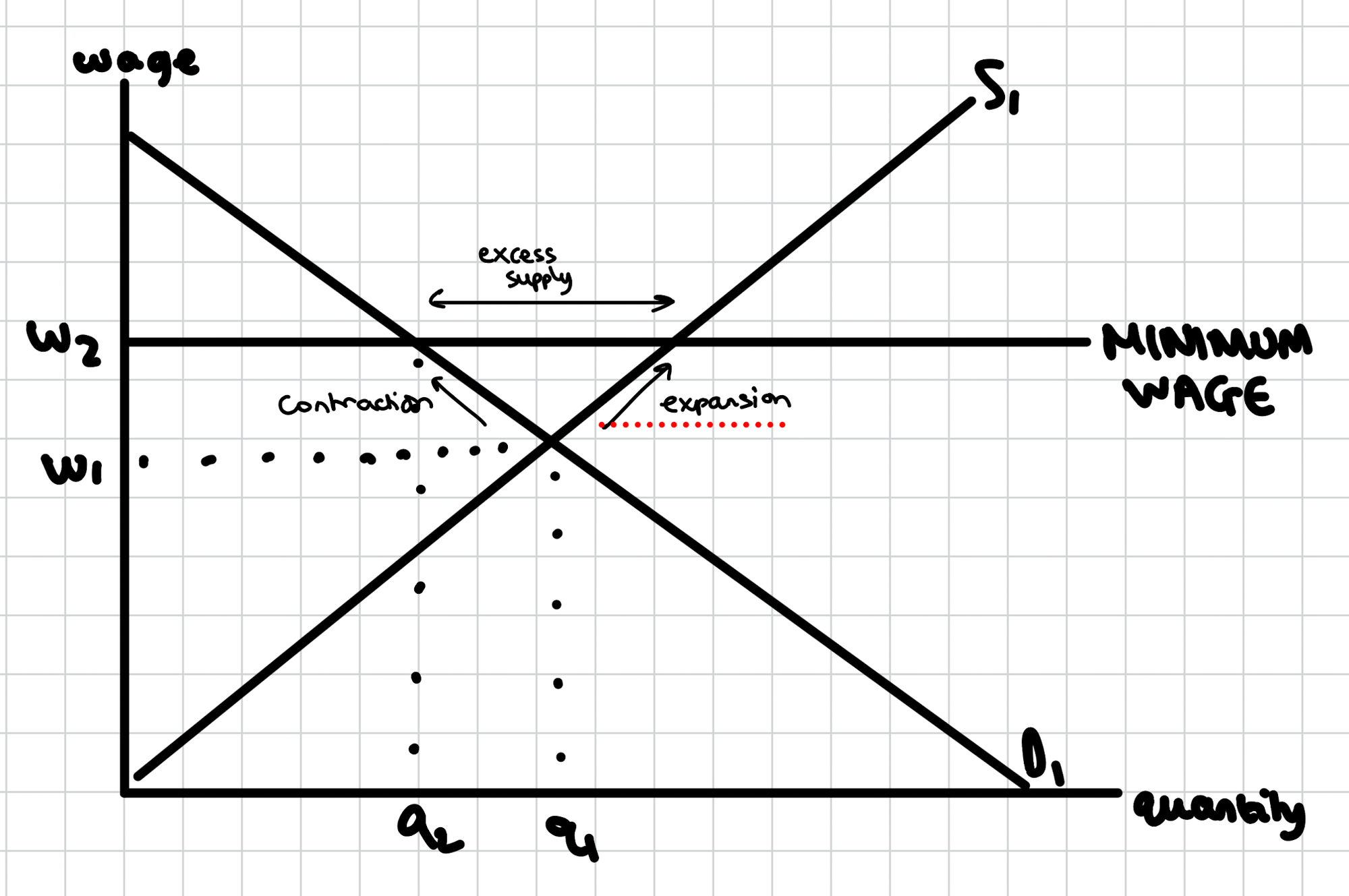
As the government sets an increased minimum wage, there's an expansion in the supply curve. This shows that there are more people willing and able to work at the higher wage rate. However, at the higher wage, firms are willing and able to hire fewer workers as they compare workers to their marginal revenue product. Therefore, there will be more workers who are turned down from a job application. Therefore, there will be an increase in unemployment. Those workers who miss out on their job applications will actually see a decrease in their living standards as the chance of them getting a job falls. Firms are more likely to replace some of these workers with machinery like capital.
A-Level Economics Tutoring
I offer one-to-one and small group A-Level Economics tutoring for students across the UK and internationally. With 87+ five-star Google reviews and tutoring experience since 2017, I specialise in helping students understand difficult concepts and improve their exam technique.