Supply-Side Policies to Reduce a Current Account Deficit | A-Level Economics Model Paragraph
Supply-side policies
Supply-side policies can be used to reduce a current account deficit. They are a range of policies aimed at increasing the economy’s productive potential. For instance, the government can increase spending on infrastructure. If the government improves transport links, this can allow UK businesses to become more productive. As productivity falls, its effects can be seen by a rightward shift in the long-run aggregate supply curve. As a result, the price level falls from PL1 to PL2, making the UK more competitive relative to other countries. Competitiveness refers to a country’s ability to sell its goods and services abroad. The UK becomes more competitive due to higher productivity and lower export prices as a result of the fall in the price level.
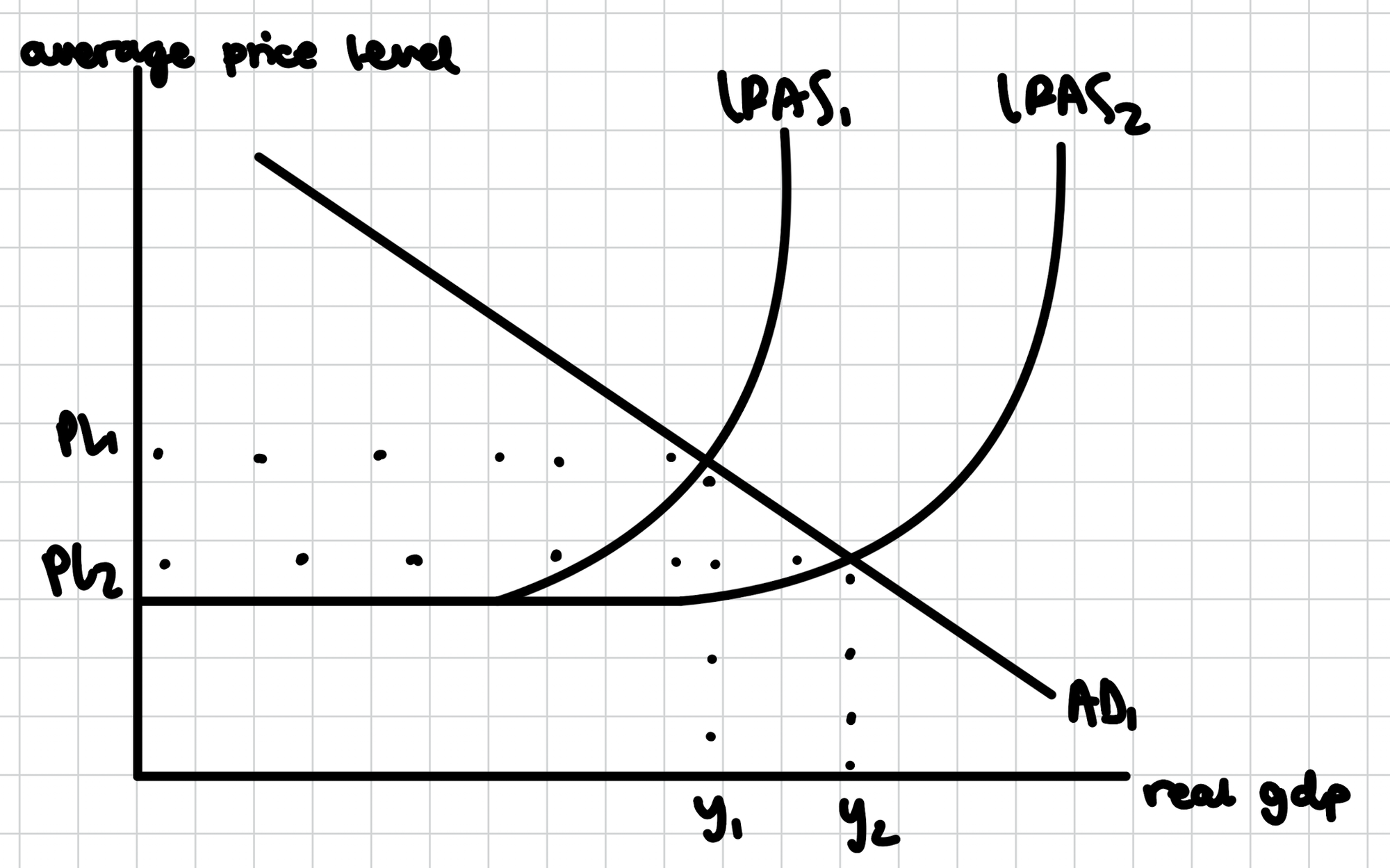
However, while supply-side policies can definitely improve the current account deficit in the long run, they may be ineffective in reducing it immediately. This is because supply-side policies have an opportunity cost. The price level will only fall once the infrastructure project has actually been completed. One example is HS2, which started in the early 2010s but is still not complete. Additionally, supply-side policies often have a huge opportunity cost. HS2 has already cost the UK government over £40 billion, and this money could have been spent on other strategies or other forms of government policies.
A-Level Economics Tutoring
I offer one-to-one and small group A-Level Economics tutoring for students across the UK and internationally. With 87+ five-star Google reviews and tutoring experience since 2017, I specialise in helping students understand difficult concepts and improve their exam technique.