Discuss the best government interventions to correct positive externalities
A-Level Economics Model Paragraph — Analysis
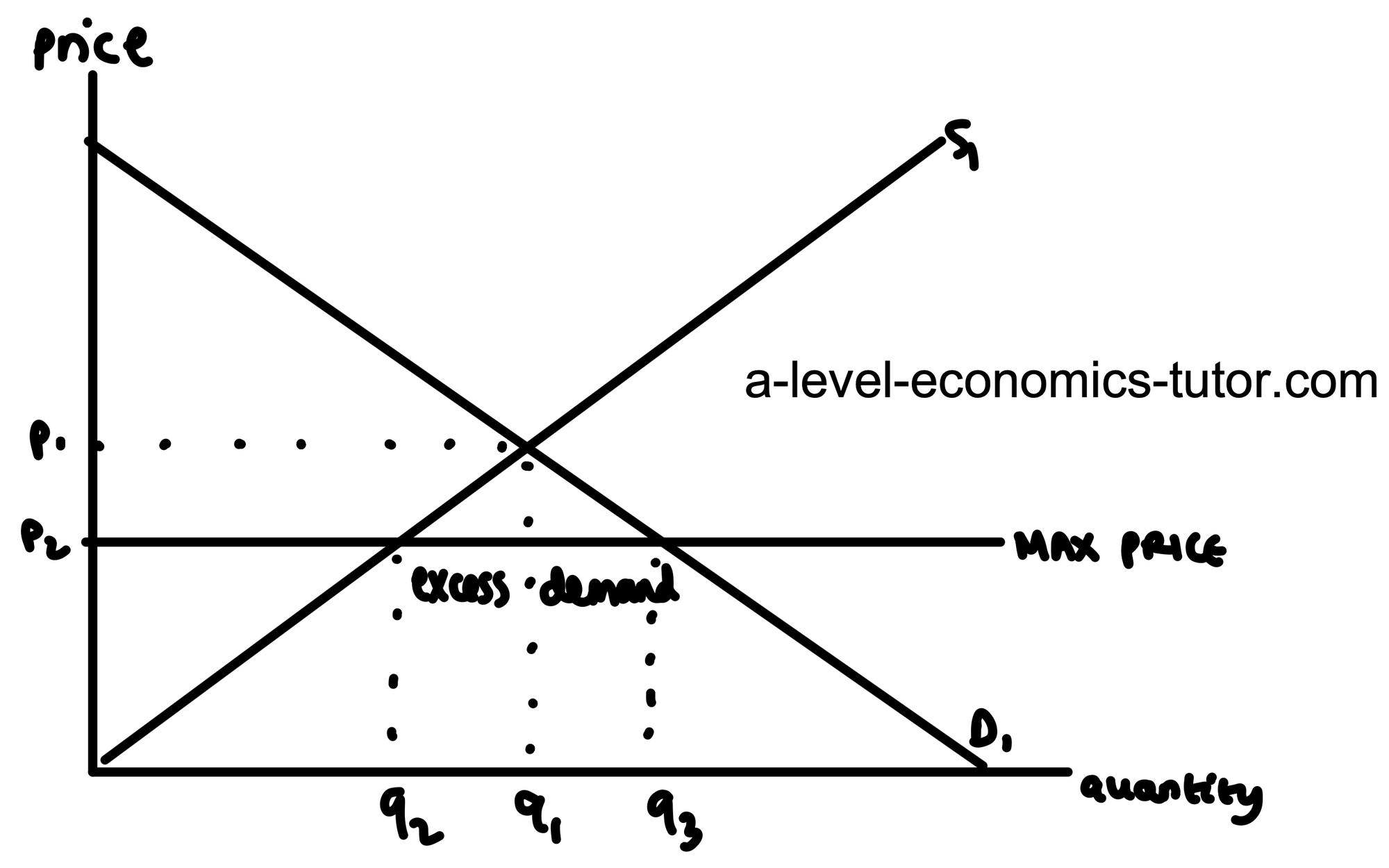
One way to correct the market failure in the market for rented housing is through maximum prices. A maximum price is a price above which it is illegal to sell, and a maximum price should be set below the free-market equilibrium to have any effect on the market. For example, New York City has used rent controls for many years, and the city's mayor has recently introduced a rent freeze for certain apartments. The diagram shows that a maximum price causes an expansion in demand and a contraction in supply, and the price decreases from P1 to P2. Overall, housing becomes more affordable, meaning that it becomes easier for low-income families to buy or rent a place to stay. Maximum prices can be particularly effective in markets where supply is price inelastic. This means that a fall in price is associated with only a small contraction in supply. Rent becomes more affordable without a large fall in the equilibrium quantity. The supply of rented apartments could be considered price inelastic, since landlords have no real reason to take stock off the market.
A-Level Economics Model Paragraph — Evaluation
A-Level Economics Model Paragraph — Analysis
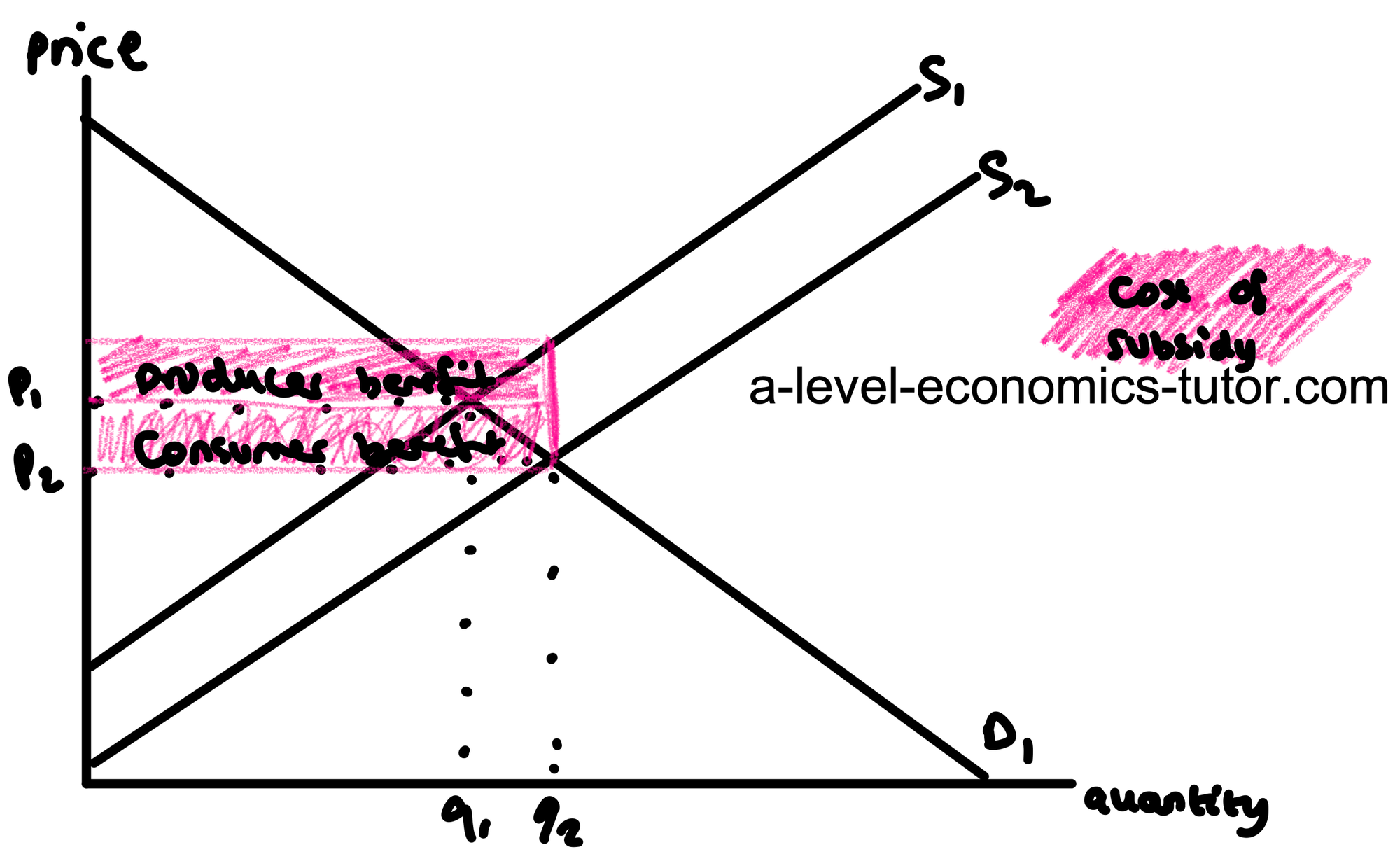
One way to correct the market failure in the market for gym memberships is through subsidies. A subsidy is a payment given by the government to firms, which helps them cover more of their costs of production. This causes supply to shift to the right, as firms become willing and able to produce more goods and services at each price. The diagram below shows the increase in supply, causing an expansion in demand and a fall in price from P1 to P2, and an increase in the equilibrium quantity from Q1 to Q2. This reduces the market failure in the market for gym memberships, where they were previously being under-consumed in the free market, as the positive externalities of exercise were being ignored by consumers.
A-Level Economics Model Paragraph — Evaluation
A-Level Economics Model Paragraph — Analysis
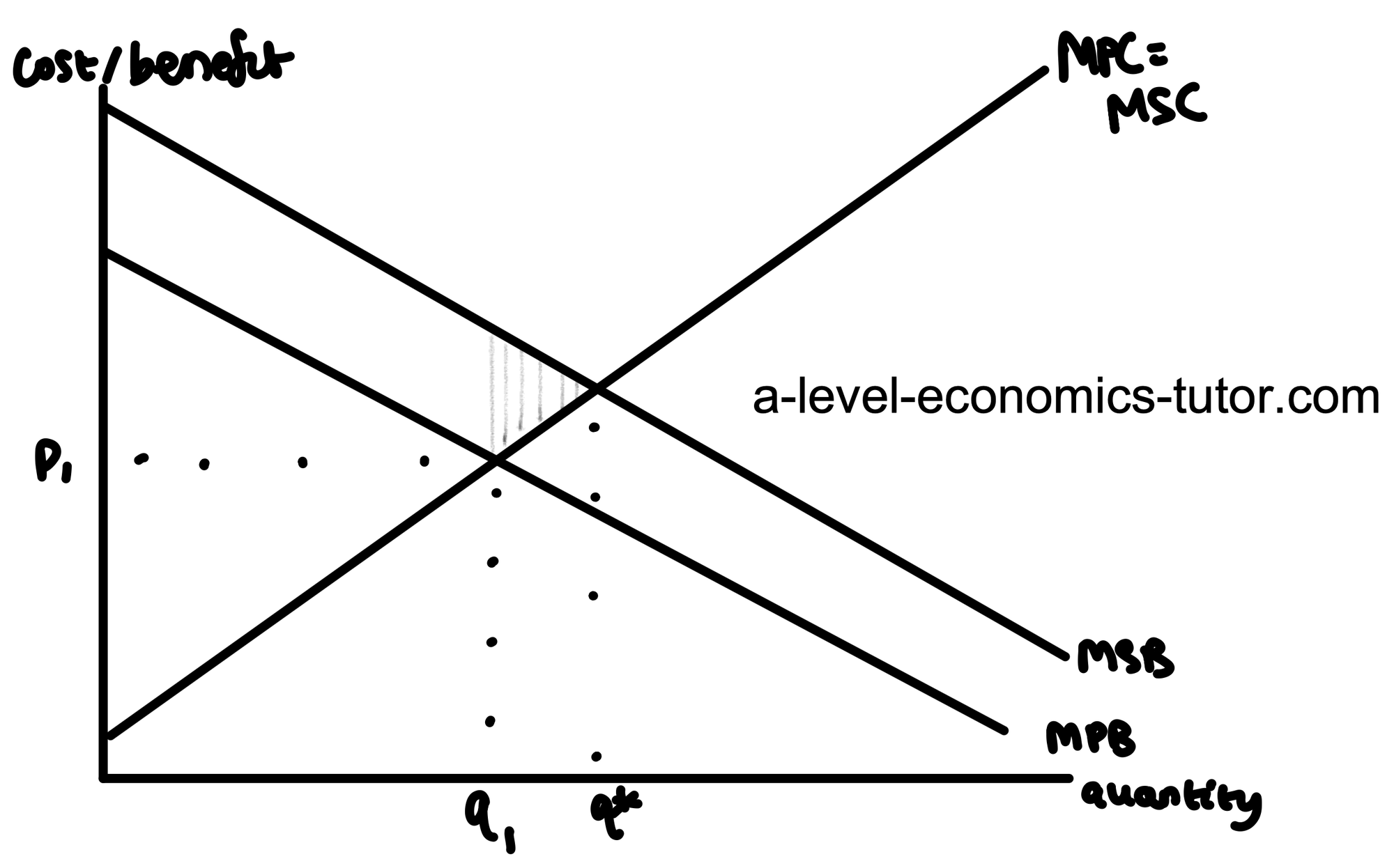
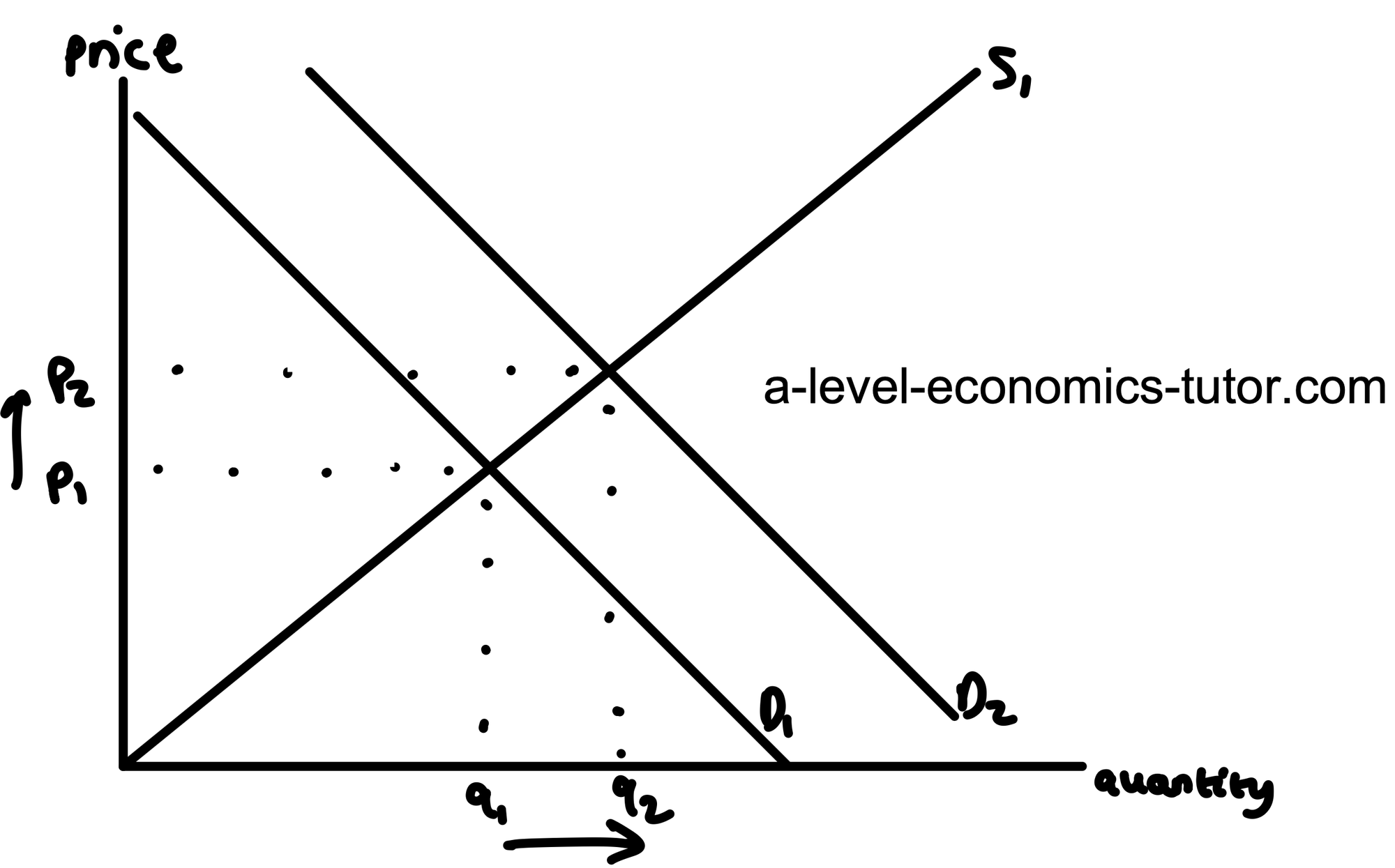
One way the government could intervene in the market for transport is through provision of information. Cycling has positive externalities in consumption, as it provides a benefit to the third party (people other than the buyer or the seller). This is because cycling reduces dependence on cars and also public transport, and this reduces damage to the environment, which would have been at a cost to future generations. The diagram below shows the under-consumption in the free market. Provision of information can be used by the government to provide people with better information about the choices they make when travelling. People can understand that cycling has a positive impact on themselves in terms of health, but also a positive impact on the environment. As the perceived benefit from cycling increases, this causes demand for cycling to increase, resulting in an increase in the market equilibrium. This is shown in the diagram below. Therefore, the market moves closer to the socially optimal level of output, and the market failure can be reduced.
A-Level Economics Model Paragraph — Evaluation
Note: State provision as a measure to correct positive externalities is on the AQA specification only. This section is not required for Edexcel or International A-Level Economics.
A-Level Economics Model Paragraph — Analysis
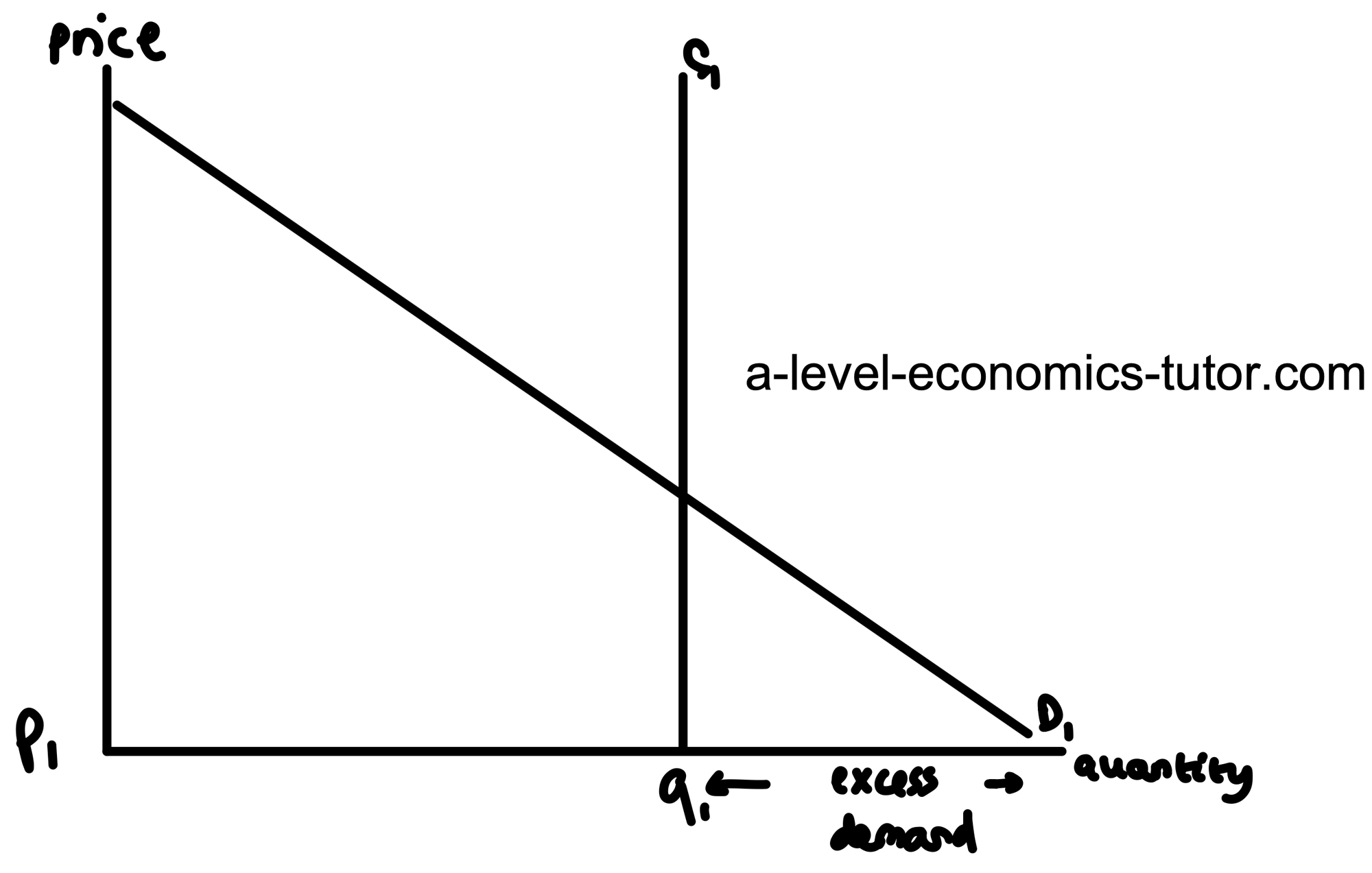
State provision occurs when the government chooses to provide goods and services free of charge, to correct a market failure. For example, dental care is a service that has positive externalities in consumption. If left to the free market, it would be under-consumed, because people would ignore the fact that people who get regular checkups and have healthier teeth provide a benefit to third parties, such as being less likely to be absent from school or work due to teeth pain or health issues. If the government were to fully fund dental care and provide it free of charge via the NHS, this could help correct the under-consumption caused by this positive externality. The diagram shows that the government may research the socially optimal quantity and provide that quantity of dental care free of charge, as shown by the quantity Q1. The benefit of this is the increase from the equilibrium quantity which would have been provided by the free market, meaning more people would have access to reliable dental care free of charge (P0), which should mean that the market failure has been resolved by the government.
A-Level Economics Model Paragraph — Evaluation
A-Level Economics Tutoring
I offer one-to-one and small group A-Level Economics tutoring for students across the UK and internationally. With 87+ five-star Google reviews and tutoring experience since 2017, I specialise in helping students understand difficult concepts and improve their exam technique.