Explain the functions of the price mechanism
The diagram below shows how the free market responds to an increase in demand. This is due to the invisible hand of the market (the functions of the price mechanism). Initally, the market is at equilibrium with a quantity q1 and price p1. Then, demand increases. This means that there is an excess demand in the market. This is because there is a greater quantity of goods and services that consumers are willing and able to buy compared to what firms are willing and able to produce. This information will be signalled through the market. For example, firms will notice busier stores or longer queues than usual. This incentivises firms to raise prices. A higher price has a rationing function as it leads to a contraction along the demand curve (D2). At the same time, the higher price causes an expansion along the supply curve (S1). This means the market reaches a new equilibrium price and quantity, and the excess demand no longer exists.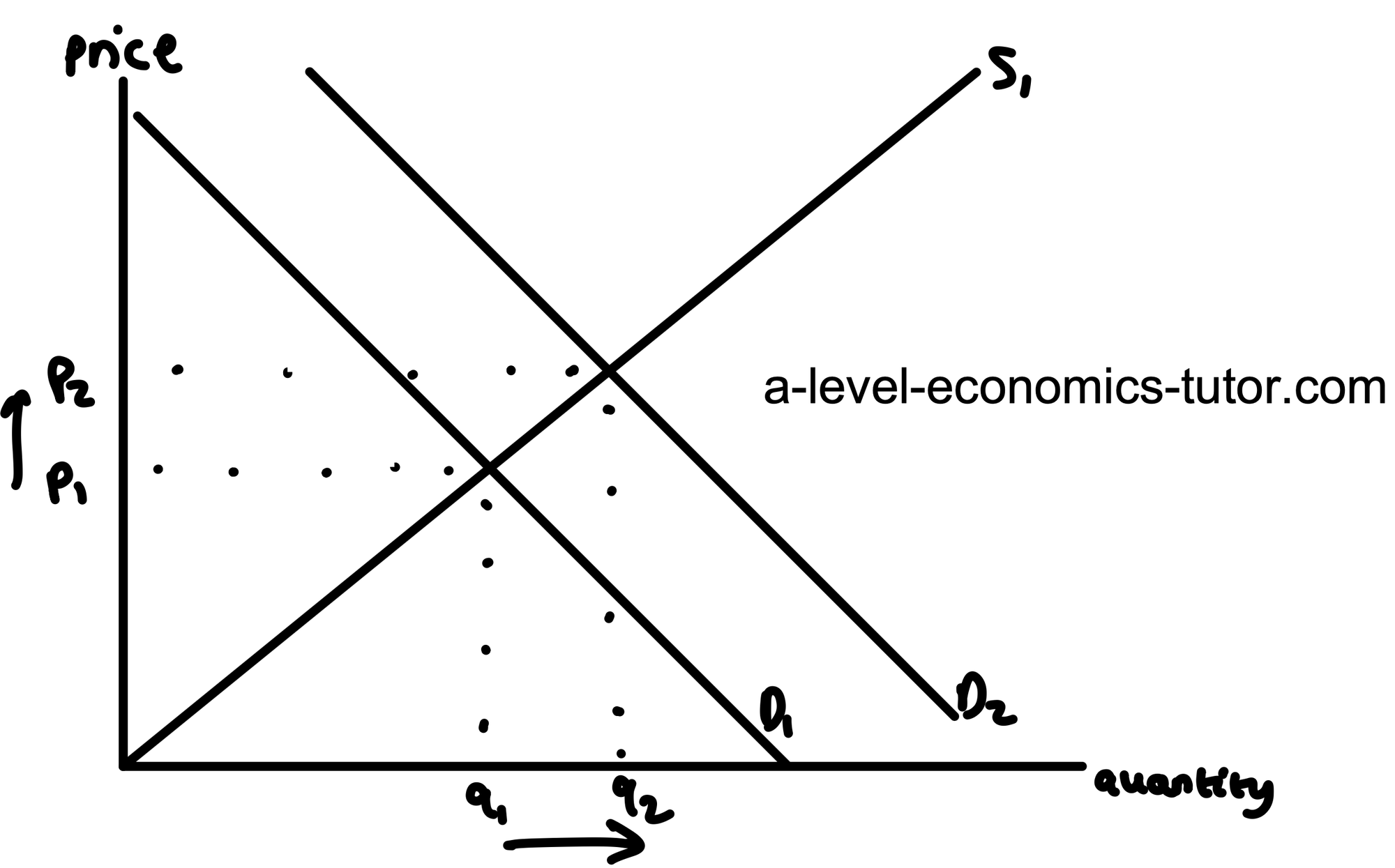
The diagram below shows how the free market responds to a decrease in demand. This is due to the invisible hand of the market (the functions of the price mechanism). Initally, the market is at equilibrium with a quantity q1 and price p1. Then, demand decreases. This means that there is an excess supply in the market. This is because there is a greater quantity of goods and services that firms are willing and able to produce compared to what consumers are willing and able to buy. This information will be signalled through the market. For example, firms will notice quieter stores or shorter queues than usual. This incentivises firms to reduce prices. A lower price has a rationing function as it leads to an expansion along the demand curve (D2). At the same time, the lower price causes a contraction along the supply curve (S1). This means the market reaches a new equilibrium price and quantity, and the excess supply no longer exists.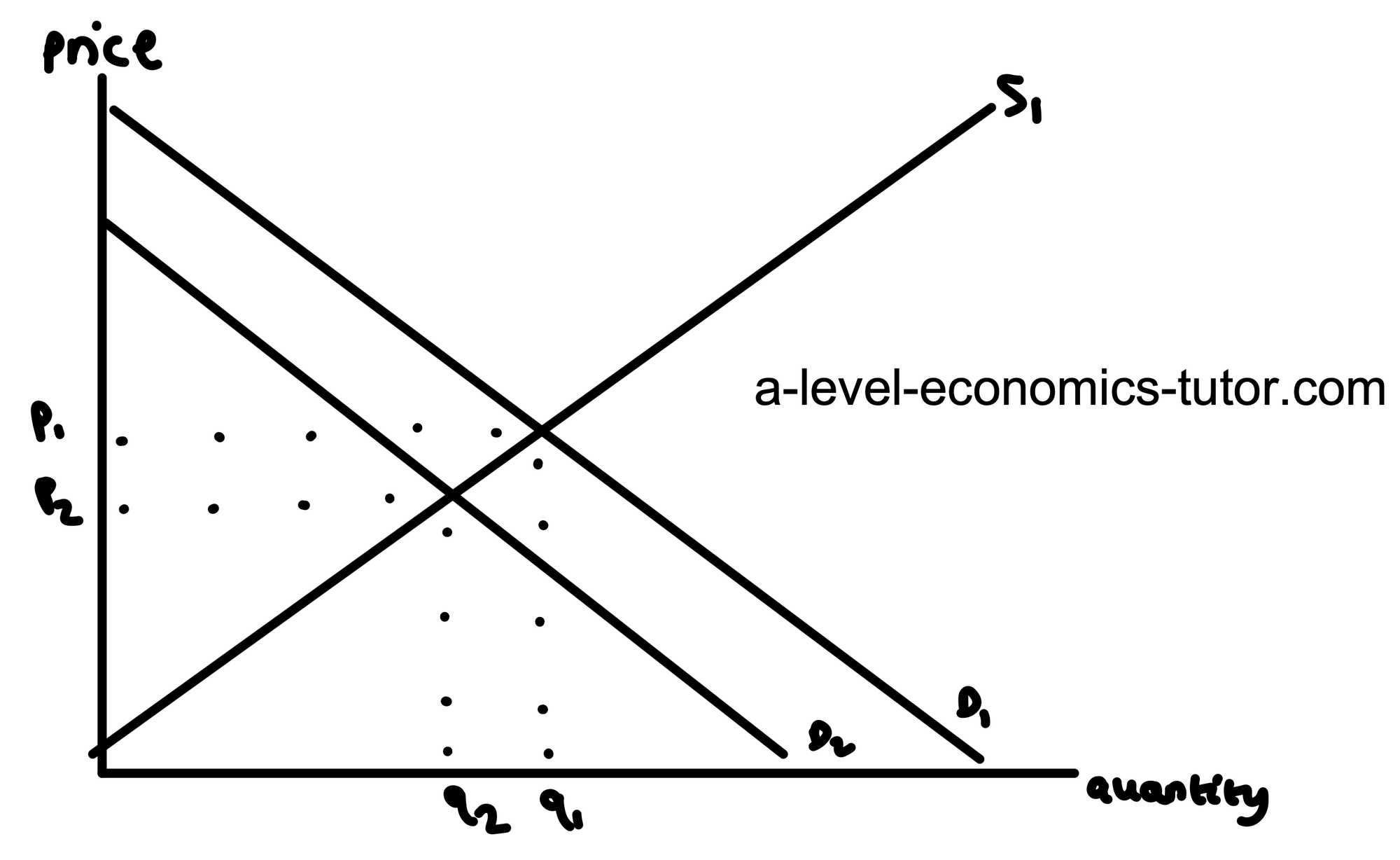
The diagram below shows how the free market responds to a decrease in supply. This is due to the invisible hand of the market (the functions of the price mechanism). Initally, the market is at equilibrium with a quantity q1 and price p1. Then, supply decreases. This means that there is an excess demand in the market. This is because there is a greater quantity of goods and services that consumers are willing and able to buy compared to what firms are willing and able to produce. This information will be signalled through the market. For example, firms will notice busier stores or longer queues than usual. This incentivises firms to raise prices. A higher price has a rationing function as it leads to a contraction along the demand curve (D1). At the same time, the higher price causes an expansion along the supply curve (S2). This means the market reaches a new equilibrium price and quantity, and the excess demand no longer exists.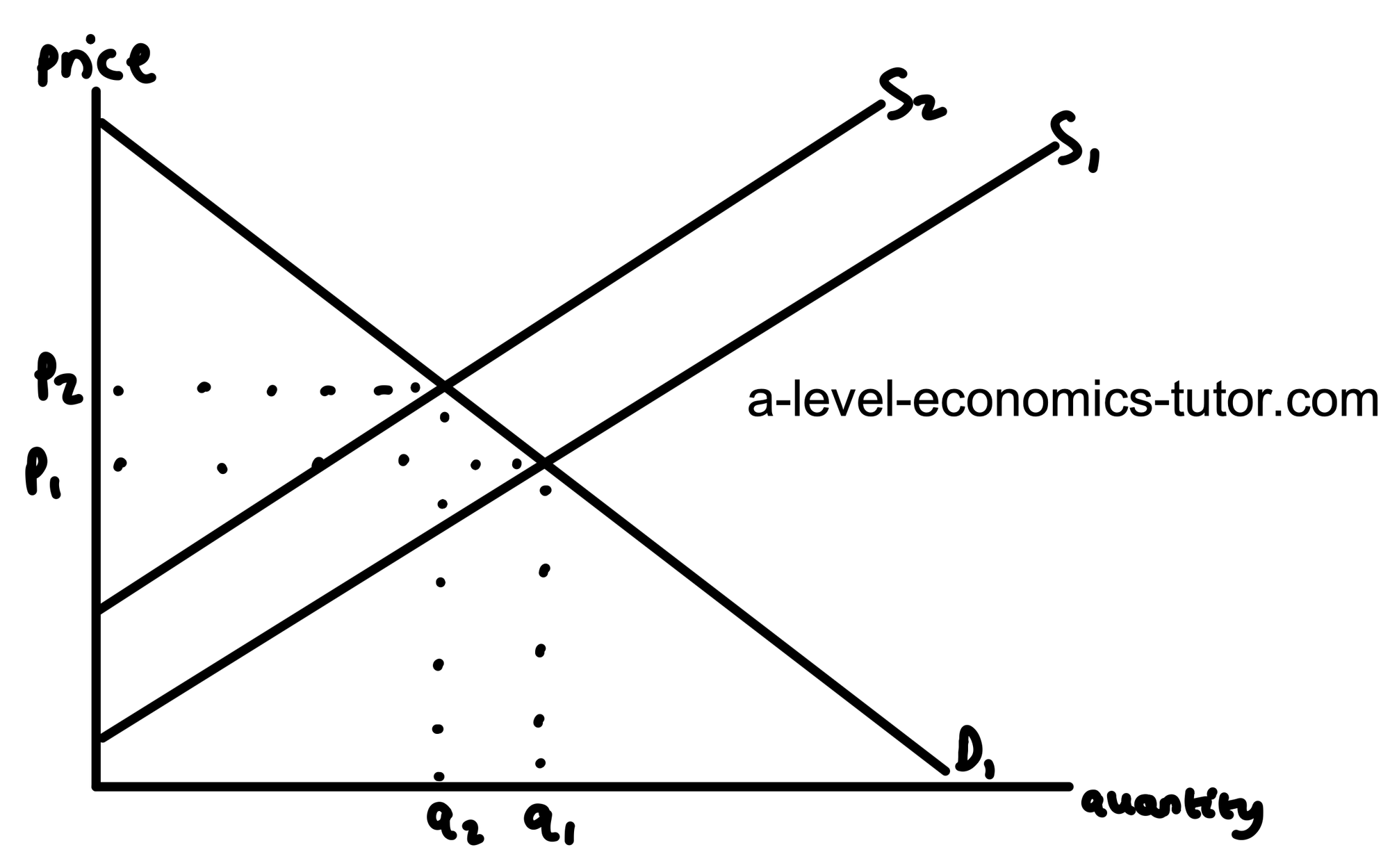
The diagram below shows how the free market responds to an increase in supply. This is due to the invisible hand of the market (the functions of the price mechanism). Initally, the market is at equilibrium with a quantity q1 and price p1. Then, supply increases. This means that there is an excess supply in the market. This is because there is a greater quantity of goods and services that firms are willing and able to produce compared to what consumers are willing and able to buy. This information will be signalled through the market. For example, firms will notice quieter stores or shorter queues than usual. This incentivises firms to reduce prices. A lower price has a rationing function as it leads to an expansion along the demand curve (D1). At the same time, the lower price causes a contraction along the supply curve (S2). This means the market reaches a new equilibrium price and quantity, and the excess supply no longer exists.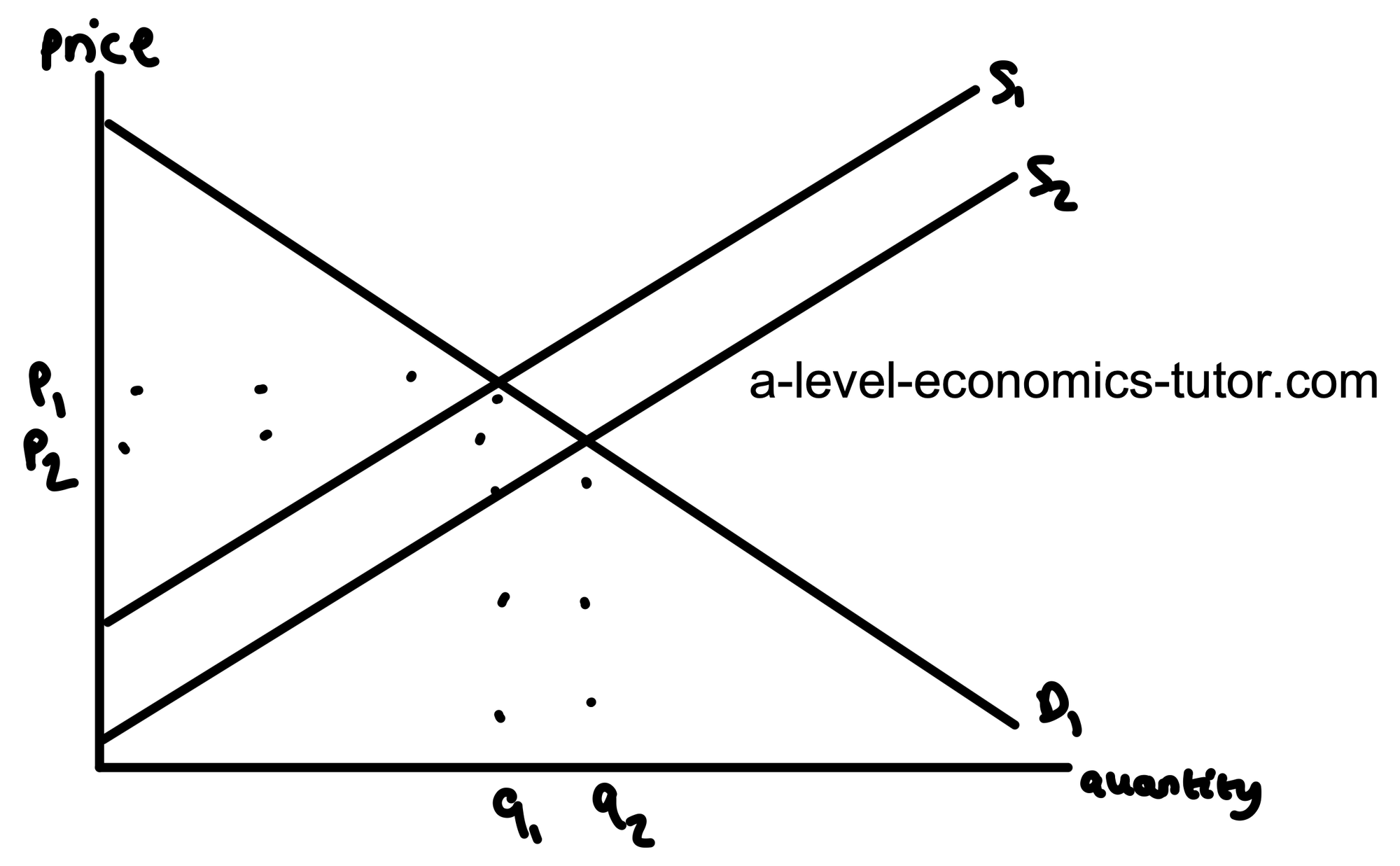
A-Level Economics Tutoring
I offer one-to-one and small group A-Level Economics tutoring for students across the UK and internationally. With 87+ five-star Google reviews and tutoring experience since 2017, I specialise in helping students understand difficult concepts and improve their exam technique.