Externalities | A-Level Economics Notes
These revision notes cover everything you need to know about Externalities for A-Level Economics. They're designed for students studying AQA A-Level Economics, Edexcel A-Level Economics, and Edexcel International A-Level Economics. Written by Jaisul Naik, UCL Economics graduate and A-Level Economics tutor since 2017.
💡
EDEXCEL STUDENTS ONLY NEED TO LEARN POSITIVE EXTERNALITIES IN CONSUMPTION AND NEGATIVE EXTERNALITIES IN PRODUCTION
What is an externality?
Externalities are the spillover effects from a transaction, on a third party.
What is a third party?
A third party is anyone apart from the producer or consumer.
What causes externalities to happen in a free market?
- In a free market, externalities get ignored by buyers and sellers due to self-interest.
- This means that goods and services get over-consumed or under-consumed or over-produced or under-produced.
- This means that there is a market failure as there is a misallocation of resources.
- Social welfare is not maximised.
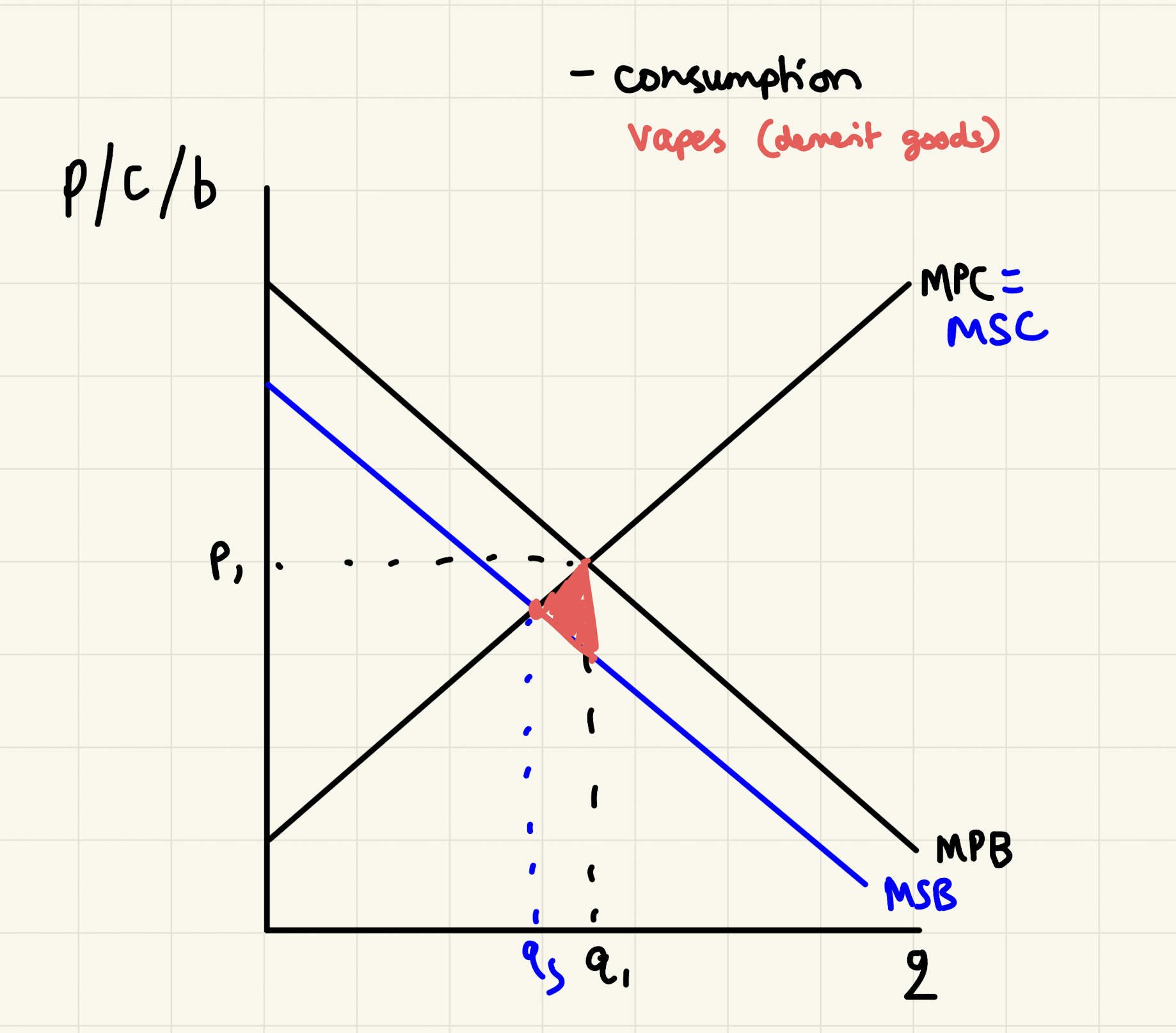
What is a negative externality in consumption?
- A negative externality in consumption occurs when the consumption of a good or service has a negative impact on a third party.
- A third party is someone apart from the buyer or the seller.
- For example, when someone regularly eats unhealthy fast food, their health worsens, which means they are likely to put more burden on the NHS, and therefore taxpayers.
- In a free market, these externalities are likely to be ignored.
- This means that fast-food is over-consumed in a free market.
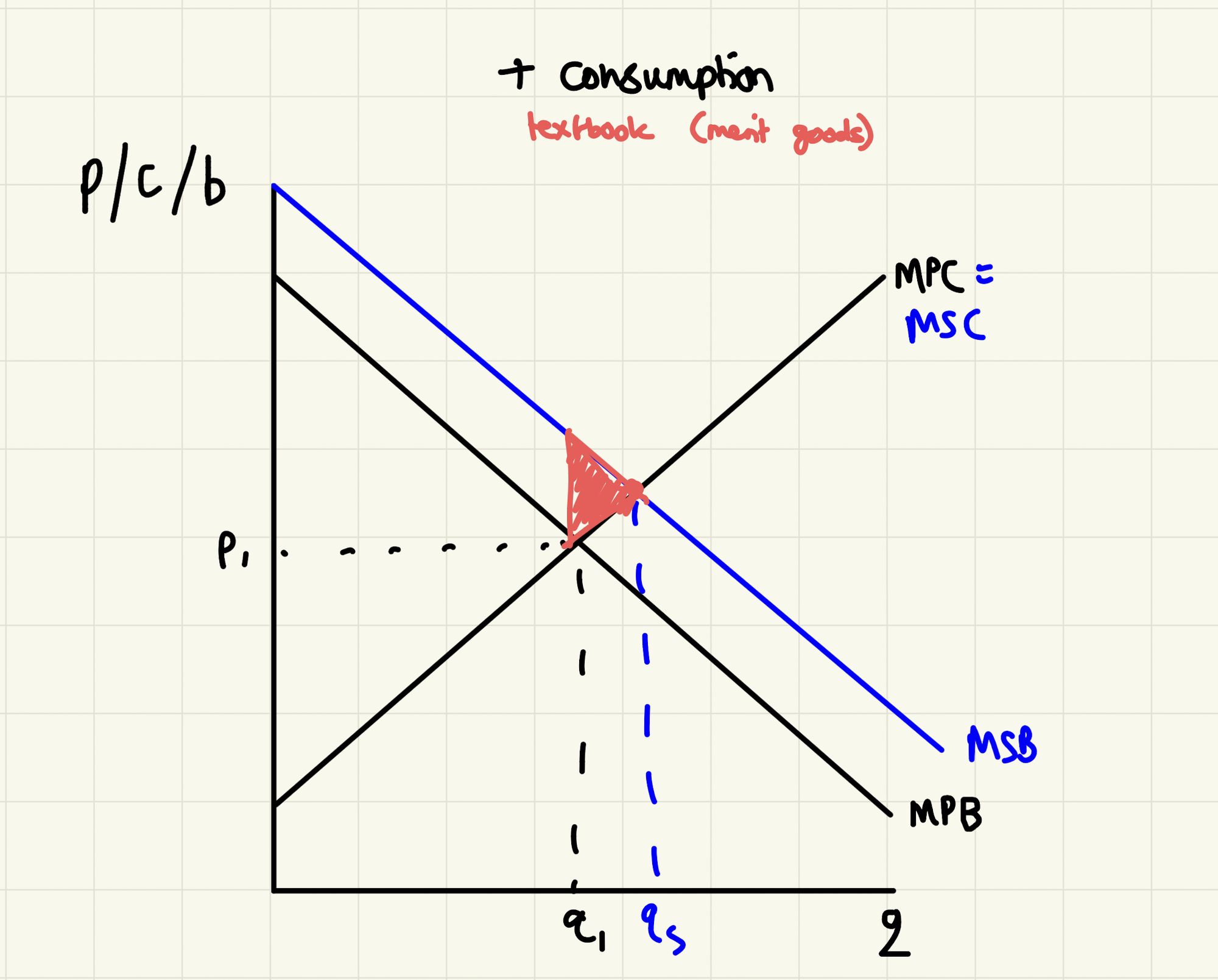
What is a positive externality in consumption?
- A positive externality in consumption occurs when the consumption of a good or service has a negative impact on a third party.
- A third party is someone apart from the buyer or the seller.
- For example, when someone regularly goes to the gym, their health improves, which means they are likely to have less burden on the NHS, and therefore taxpayers.
- In a free market, these externalities are likely to be ignored.
- This means that gym memberships are under-consumed in a free market.