Discuss the measures that can be used to reduce a current account deficit
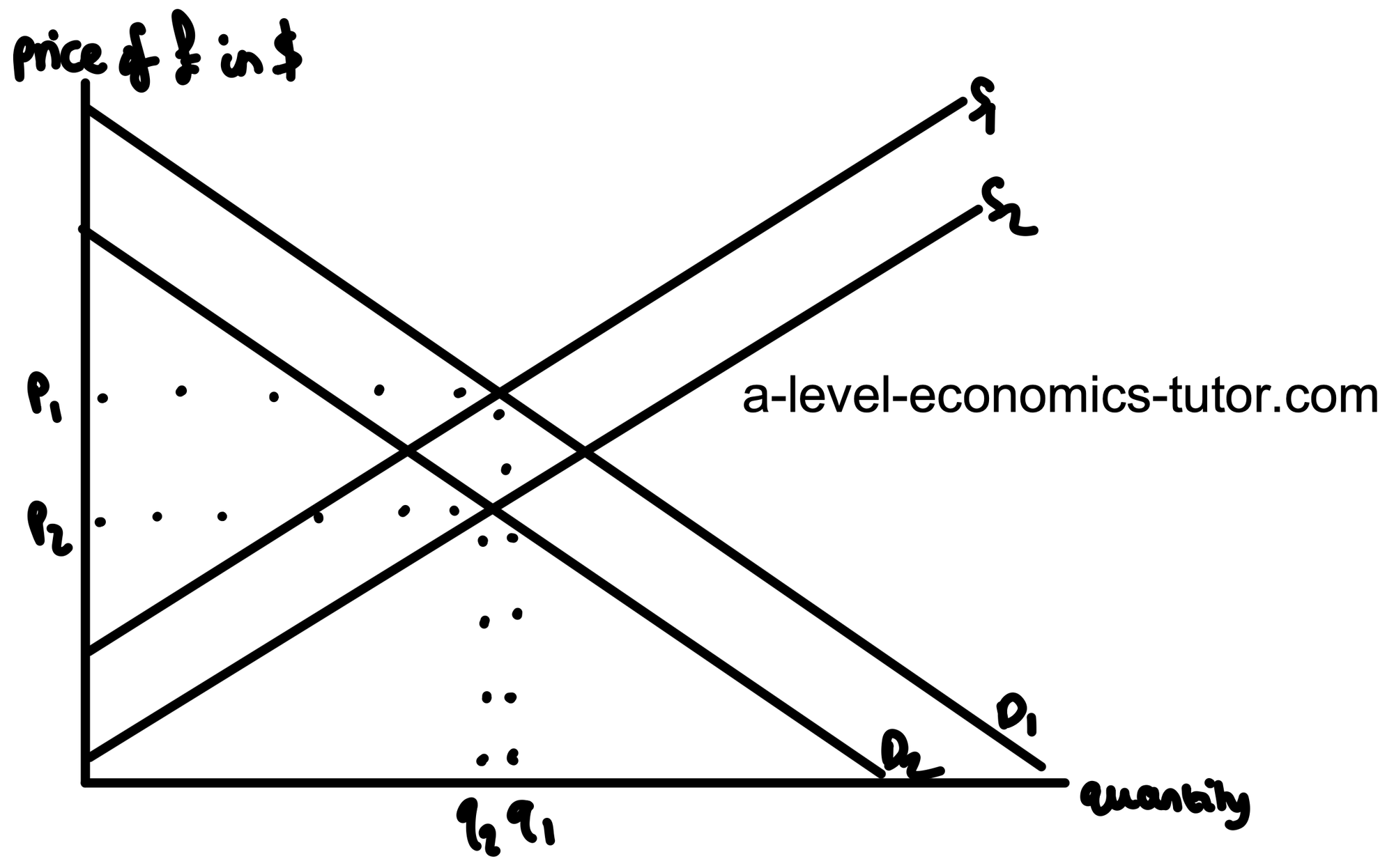
One way that a country can reduce their current account deficit is through a currency devaluation. This only applies to countries that have a fixed or managed exchange rate system. For example, China have a managed exchange rate system; they can use currency reserves to influence the value of their exchange rate. Exchange rates are the price of one currency in terms of another. In the case of China, the central bank have reserves of the yuan and the dollar. They can choose to sell yuan and buy more dollars. By buying dollars, the demand for dollars increases, so its value increases from p1 to p2. Meanwhile, the Chinese central bank are selling yuan, meaning its supply increases, and its value decreases. A weaker currency makes exports cheaper and imports more expensive. This should lead to an increase in the value of exports and a decrease in the value of imports, and therefore a reduction in the current account deficit.
One way that a country can reduce their current account deficit is by forcing their currency to depreciate. Exchange rates are the price of one currency in terms of another. The central bank can cause the currency to depreciate if they reduce interest rates. For example, if the Bank of England reduced interest rates, the reward for saving falls in the UK. This causes more hot money to flow out of the UK. This means that there is an increase in supply of the pound and a decrease in demand for the pound. This causes the pound to depreciate, making exports cheaper and imports more expensive. This should lead to an increase in the value of exports and a decrease in the value of imports, and therefore a reduction in the current account deficit.
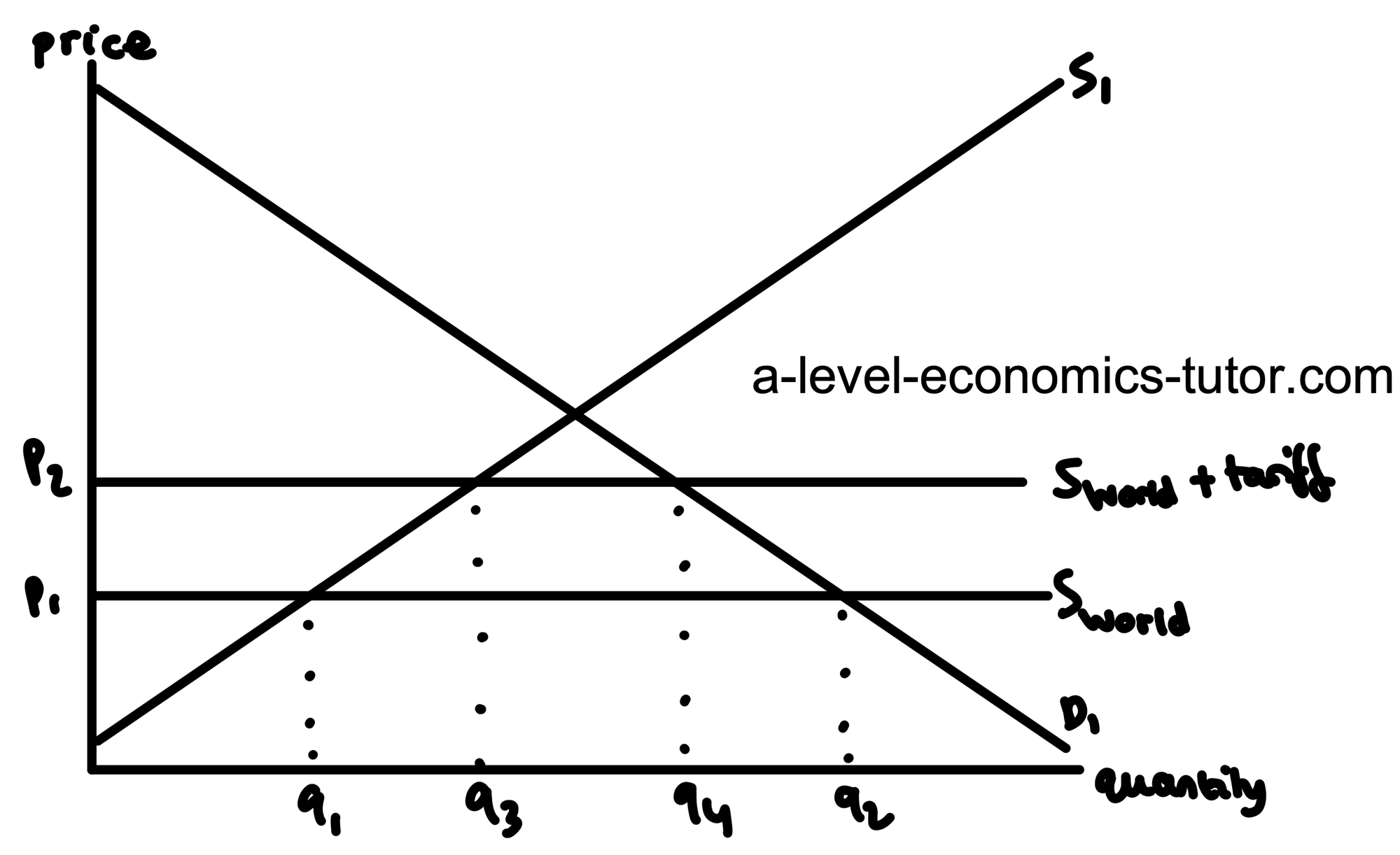
One way a country can reduce their current account deficit is by implementing protectionism, which refers to barriers to free trade. For example, the UK could implement tariffs. Tariffs are a tax on imports. The diagram below shows how new tariffs affect the volume of imports. World supply is perfectly elastic to represent the infinite number of producers of a good or service around the world, relative to the UK. The tariff causes the cost of importing a good or service to increase. This is shown by a left shift in the world supply curve. This causes the price of goods and services to increase from p1 to p2. This causes a contraction along the domestic demand curve and an expansion along the domestic supply curve. This causes the output of these goods and services to increase in the UK, from q1 to q3. Finally, the tariff also causes the value of imports to fall from q1-q2 to q3-q4. Assuming that the value of exports remains the same, this means that the UK will experience a reduction in their current account deficit.
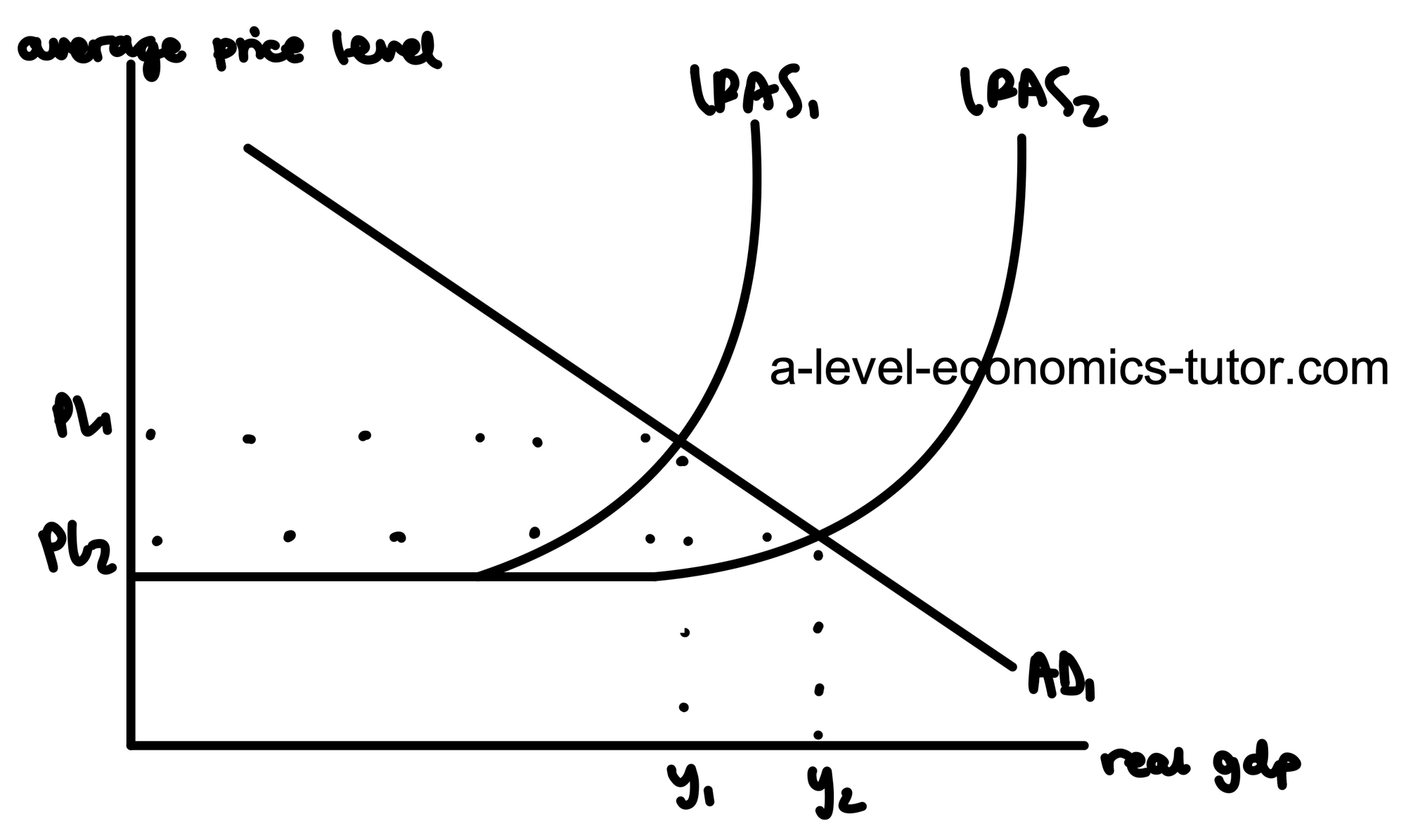
One way a country can reduce their current account deficit is by implementing supply-side policies, such as a reduction in corporation taxes. Supply-side policies are policies that lead to an increase in a country's productive potential. By reducing corporation taxes, businesses pay less tax on their profits. For example, Ireland had one of the lowest corporation taxes in Europe of around 12.5% until 2021. Firstly, the potential for higher retained profits incentivises more firms to set up. Secondly, higher retained profits allow businesses to increase investment in capital. Improvements in capital can allow work to be done faster. As a result, businesses are able to produce more goods and services when all factors of production are fully employed. This increases the productive potential of the economy, shown by a rightward shift in the long-run aggregate supply (LRAS) curve. This leads to a decrease in the price level from pl1 to pl2 as there is the same demand chasing more goods and services. This makes UK goods and services more competitive, assuming that the inflation rate remains steady in other countries. Competitiveness refers to the ability of a country to sell its exports. An increase in competitiveness should lead to an increase in the value of exports and a decrease in the value of imports, and therefore a reduction in the current account deficit.
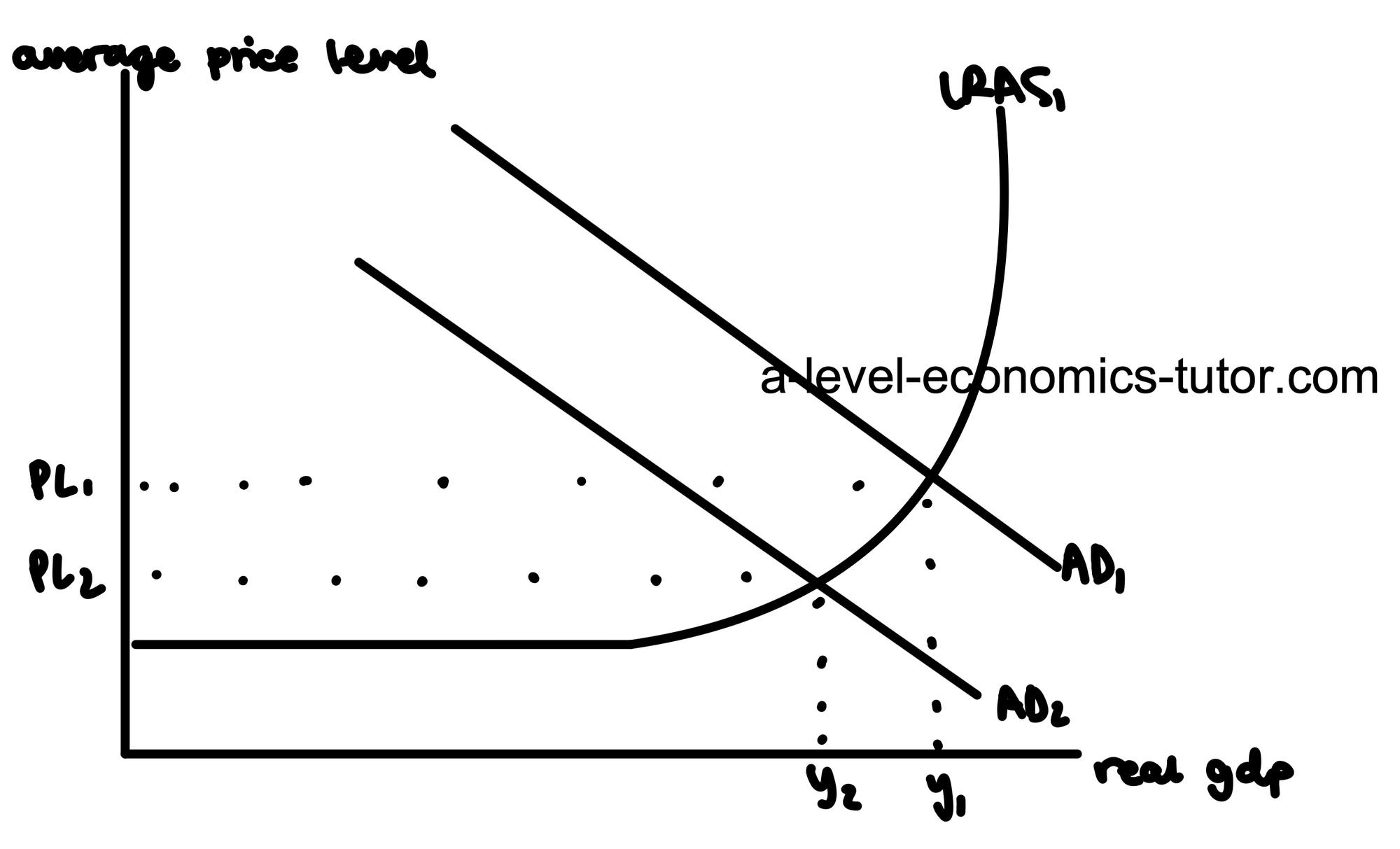
One way a country can reduce their current account deficit is by implementing contractionary demand-side policies, such as contractionary fiscal policy. This is when the government reduce spending or increase taxes. For example, the government could decide to increase income taxes. This means that workers will keep less of their incomes. A lower disposable income will lead to consumers having to cut their spending. Marginal propensity to import is relatively high in the UK, which means that a fall in incomes is likely to cause a significant fall in imports. This is because imports are often luxury goods rather than normal goods. Additionally, this policy causes aggregate demand to fall, and this causes the price level to fall, as there is less demand chasing the same number of goods and services. This makes UK goods and services more competitive, assuming that the inflation rate remains steady in other countries. Competitiveness refers to the ability of a country to sell its exports. An increase in competitiveness should lead to an increase in the value of exports and a decrease in the value of imports, and therefore a reduction in the current account deficit.
A-Level Economics Tutoring
I offer one-to-one and small group A-Level Economics tutoring for students across the UK and internationally. With 100+ five-star Google reviews and tutoring experience since 2017, I specialise in helping students understand difficult concepts and improve their exam technique.