Discuss the best government interventions to correct negative externalities
A-Level Economics Model Paragraph — Analysis
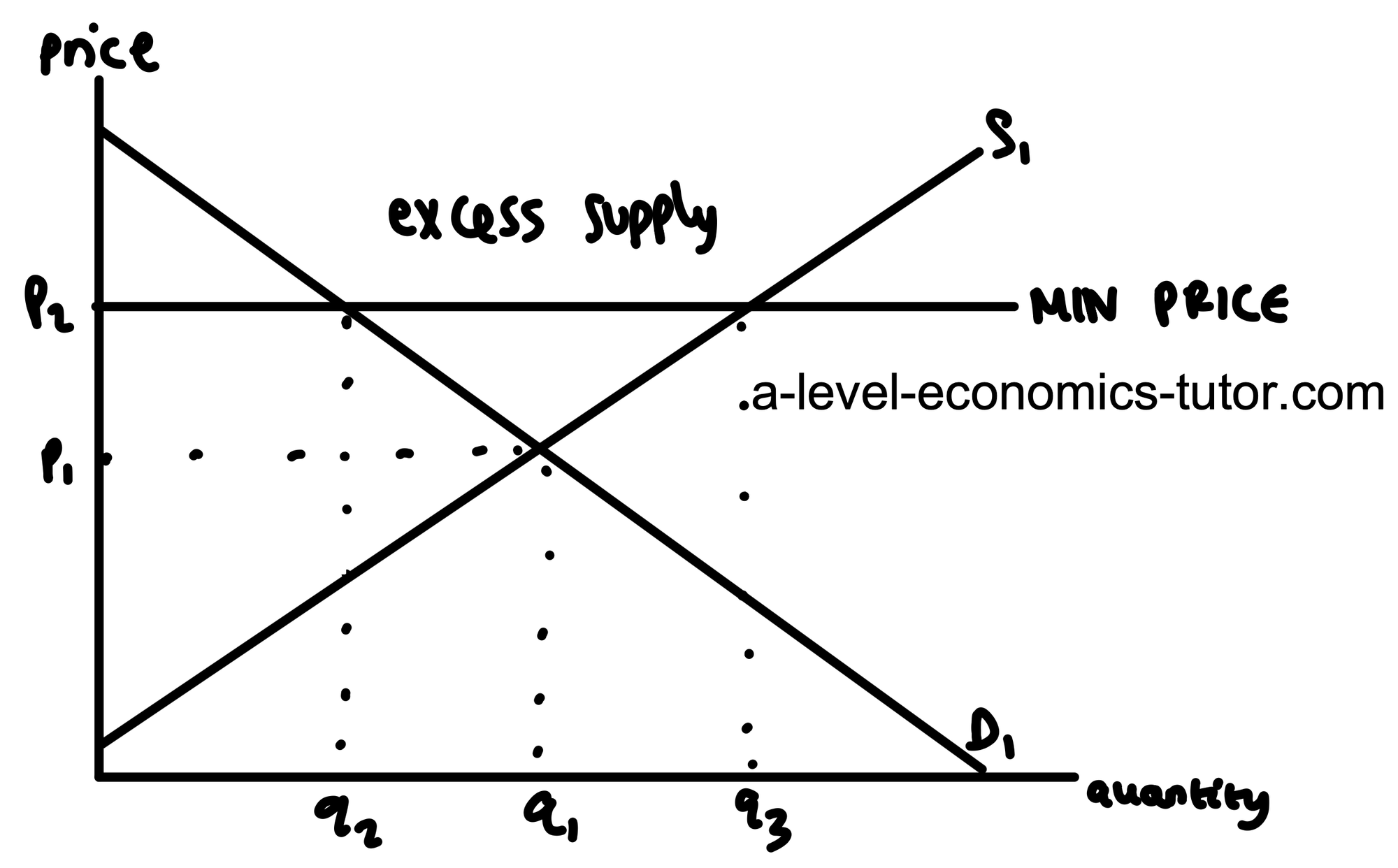
One way to correct the market failure in the market for alcohol is through minimum prices. A minimum price is a price below which it is illegal to sell, and a minimum price should be set above the free-market equilibrium to have any effect on the market. There is a minimum price of 65p per unit in Scotland. The diagram shows that a minimum price causes a contraction in demand and an expansion in supply, and the price increases from P1 to P2. As a result, there is a decrease in the amount of alcohol consumed, therefore a movement closer to the socially optimal level of output in the market.
A-Level Economics Model Paragraph — Evaluation
A-Level Economics Model Paragraph — Analysis
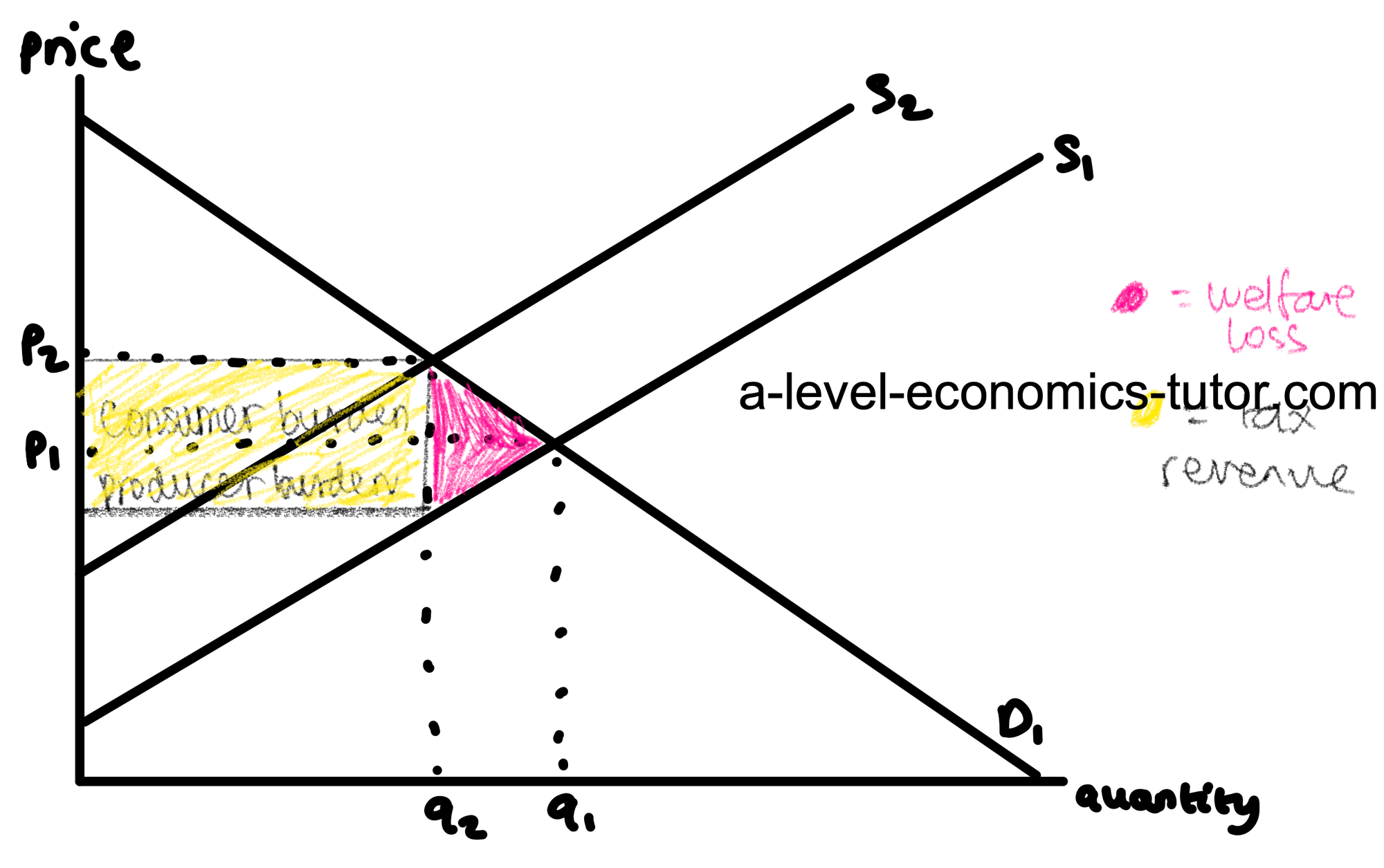
One way to correct the market failure associated with sugary drinks is through indirect taxes. An indirect tax is an extra cost of production imposed by the government on firms. Higher costs of production mean that firms will be willing and able to produce less sugary drinks at each given price. There is currently a sugar tax of around 20 to 30p per litre in the UK, depending on the sugar content per 100ml. The diagram shows the effects of the indirect tax. Supply decreases, and this causes a contraction in demand. Overall, there is an increase in the equilibrium price from P1 to P2 and a decrease in the equilibrium quantity of sugary drinks from Q1 to Q2. This means that the market equilibrium quantity moves closer to the socially optimal level of output.
A-Level Economics Model Paragraph — Evaluation
A-Level Economics Model Paragraph — Analysis
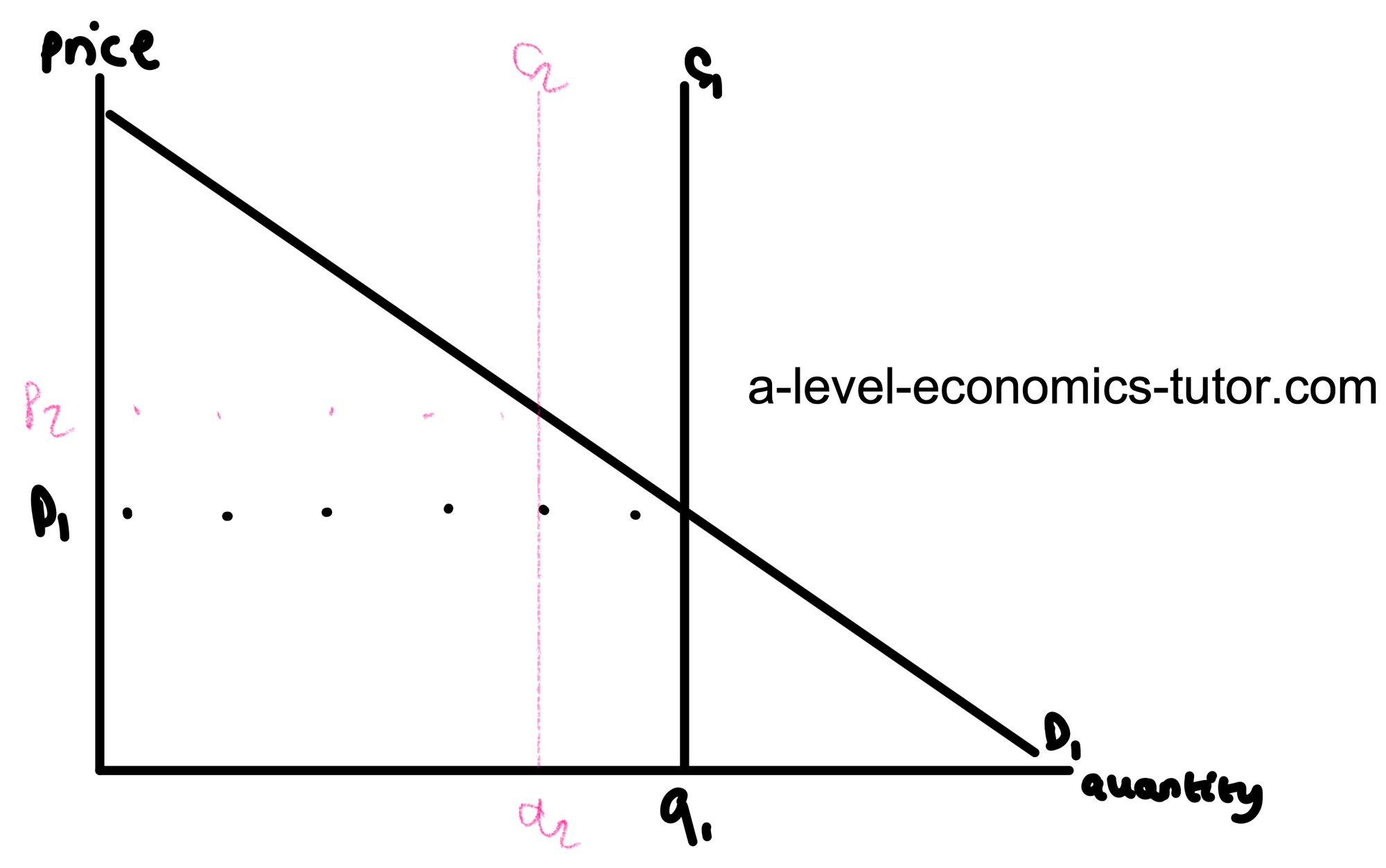
One way the government can reduce negative externalities of production is through tradable pollution permits. When the production of goods and services causes pollution in the form of carbon emissions, the government can begin by researching the size of the market failure and issue a certain number of pollution permits depending on where the socially optimal level of output is in the market. The government can also choose to reduce the allocation of permits gradually over time, tightening the cap further. The diagram below shows the market for pollution permits. D1 represents the demand for pollution permits, and S1 represents the perfectly inelastic supply of pollution permits. It is perfectly inelastic because the quantity supplied does not vary at all with price, because the quantity of available permits is pre-determined by the government. As this doesn't change, the government can almost guarantee that carbon emissions don't exceed Q1. If firms want to pollute more, they will have to buy additional permits. If other firms choose to pollute less, they are able to sell their extra permits. The price mechanism incentivises firms to reduce emissions so that they can earn revenue. It also punishes firms who are emitting too much carbon, as they must pay a price to buy more permits.
A-Level Economics Model Paragraph — Evaluation
A-Level Economics Model Paragraph — Analysis
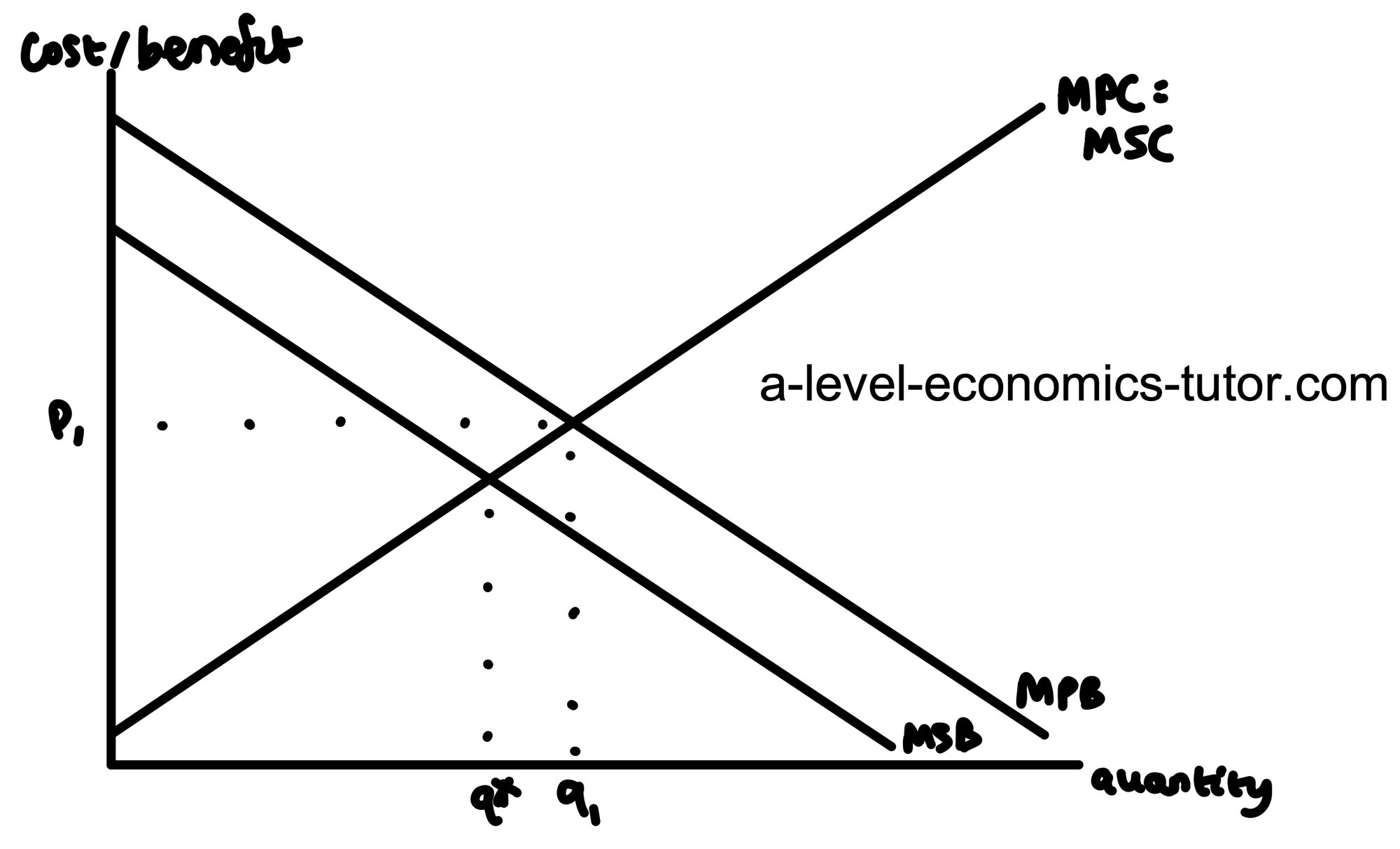
One way the government could intervene in the market for fast food is through provision of information. The market for fast food has negative externalities in consumption, as consumers are motivated to maximise their own utility. They are also likely to ignore the long-term health costs to themselves and the burden this places on the NHS. The government could provide information through advertising campaigns or warning labels, highlighting the links between fast food and conditions like obesity and heart disease. This can be done in a similar way to the warning signs on cigarette packages. As people become more aware of these risks, their perceived benefit from consuming fast food falls, causing demand to shift to the left. This results in a lower equilibrium quantity, moving the market closer to the socially optimal level of output.
A-Level Economics Model Paragraph — Evaluation
A-Level Economics Model Paragraph — Analysis
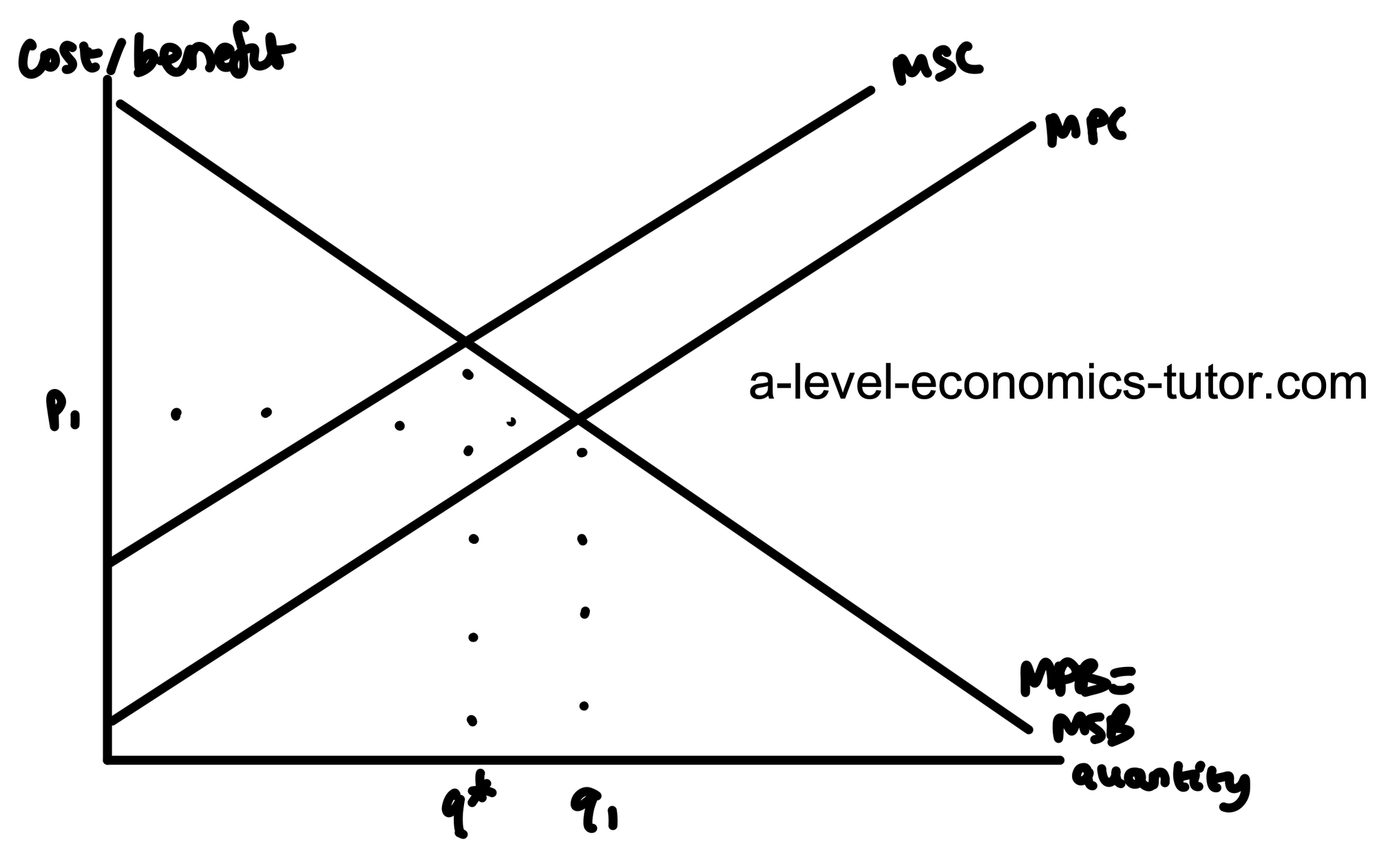
One way the government could intervene to reduce the over-production of single-use paper cups is through information provision. The coffee market has negative externalities in production, as producers have the objective to maximise profits. Therefore they are likely to ignore or under-value the long-term environmental damage caused by using single-use packaging that cannot be recycled once contaminated. The government could provide information through advertising campaigns highlighting the environmental cost of single-use cups. Firms who make better decisions regarding paper waste can benefit from improvements in their reputation. Coffee shops might start to run schemes that reward customers for bringing their own cups, or offer long-term customers high-quality reusable cups at discounted prices. The goal would be to reduce the number of single-use cups sold, discouraging over-production. This should cause a fall in supply, moving the market closer to the socially optimal level of output.
A-Level Economics Model Paragraph — Evaluation
A-Level Economics Tutoring
I offer one-to-one and small group A-Level Economics tutoring for students across the UK and internationally. With 87+ five-star Google reviews and tutoring experience since 2017, I specialise in helping students understand difficult concepts and improve their exam technique.