Trade-offs between Macroeconomic Objectives | A-Level Economics Notes
These revision notes cover everything you need to know about Macroeconomic Trade-offs for A-Level Economics. They're designed for students studying AQA A-Level Economics, Edexcel A-Level Economics, and Edexcel International A-Level Economics. Written by Jaisul Naik, UCL Economics graduate and A-Level Economics tutor since 2017.
Evaluate the trade-off between economic growth and inflation.
- An increase in economic growth can cause an increase in inflation.
- Economic growth refers to an increase in real gdp, which is the total value of goods and services in the economy, adjusted for inflation.
- An increase in real gdp means that output, spending, and incomes are greater.
- As confidence and disposable incomes are higher, consumer spending increases, which causes an increase in aggregate demand.
- An increase in aggregate demand causes demand-pull inflation, especially if the economy experiences a positive output gap, which is when the actual rate of economic growth is higher than the trend rate of economic growth.
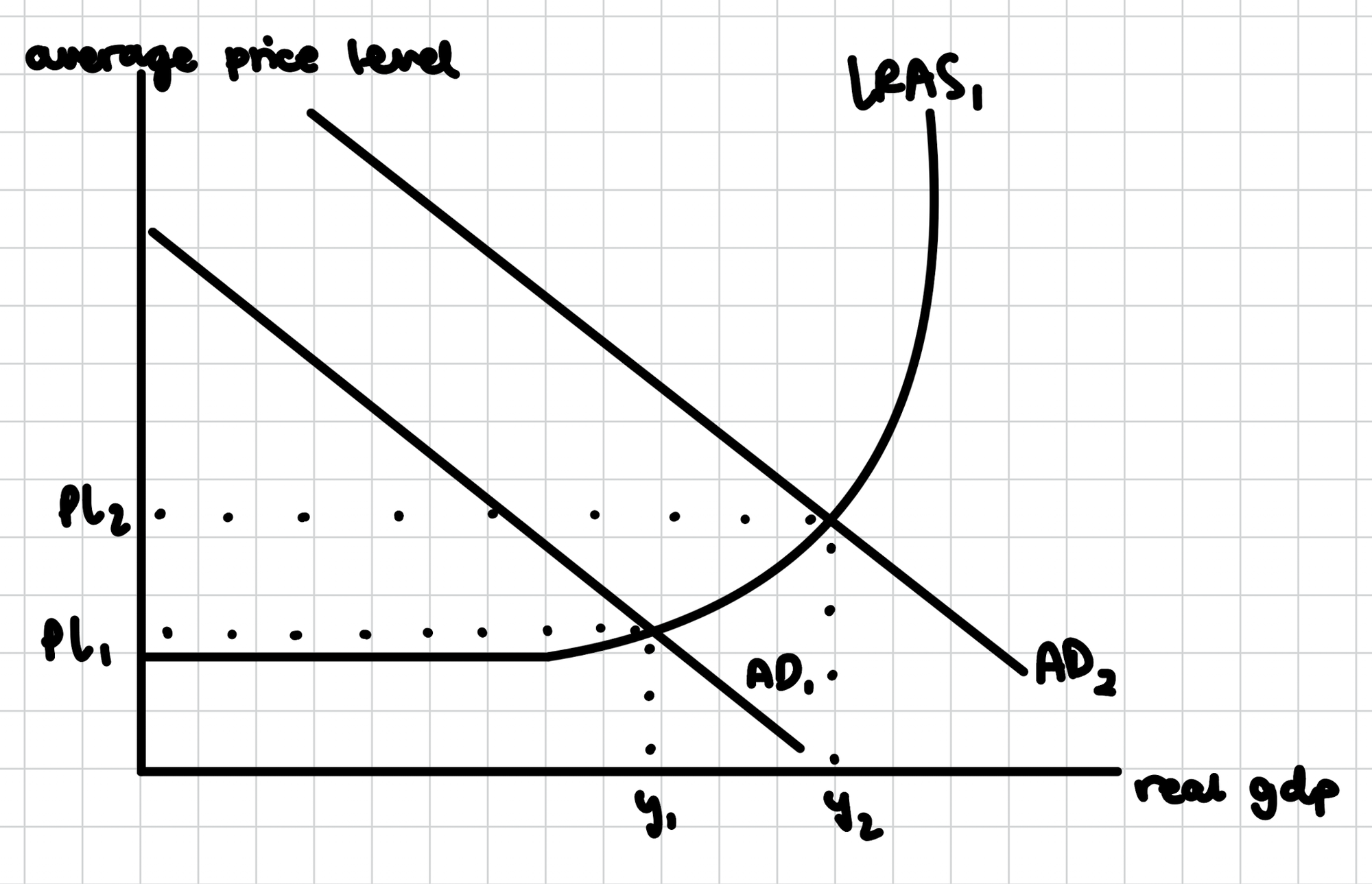
This trade-off depends on:
The state of the economy
- However, economic growth can also increase without causing inflationary pressure, especially if the economy is currently experiences a negative output gap.
- This is when the economy is operating with spare capacity.
- So, an increase in demand-pull inflation does not pressurise firms to increase prices.
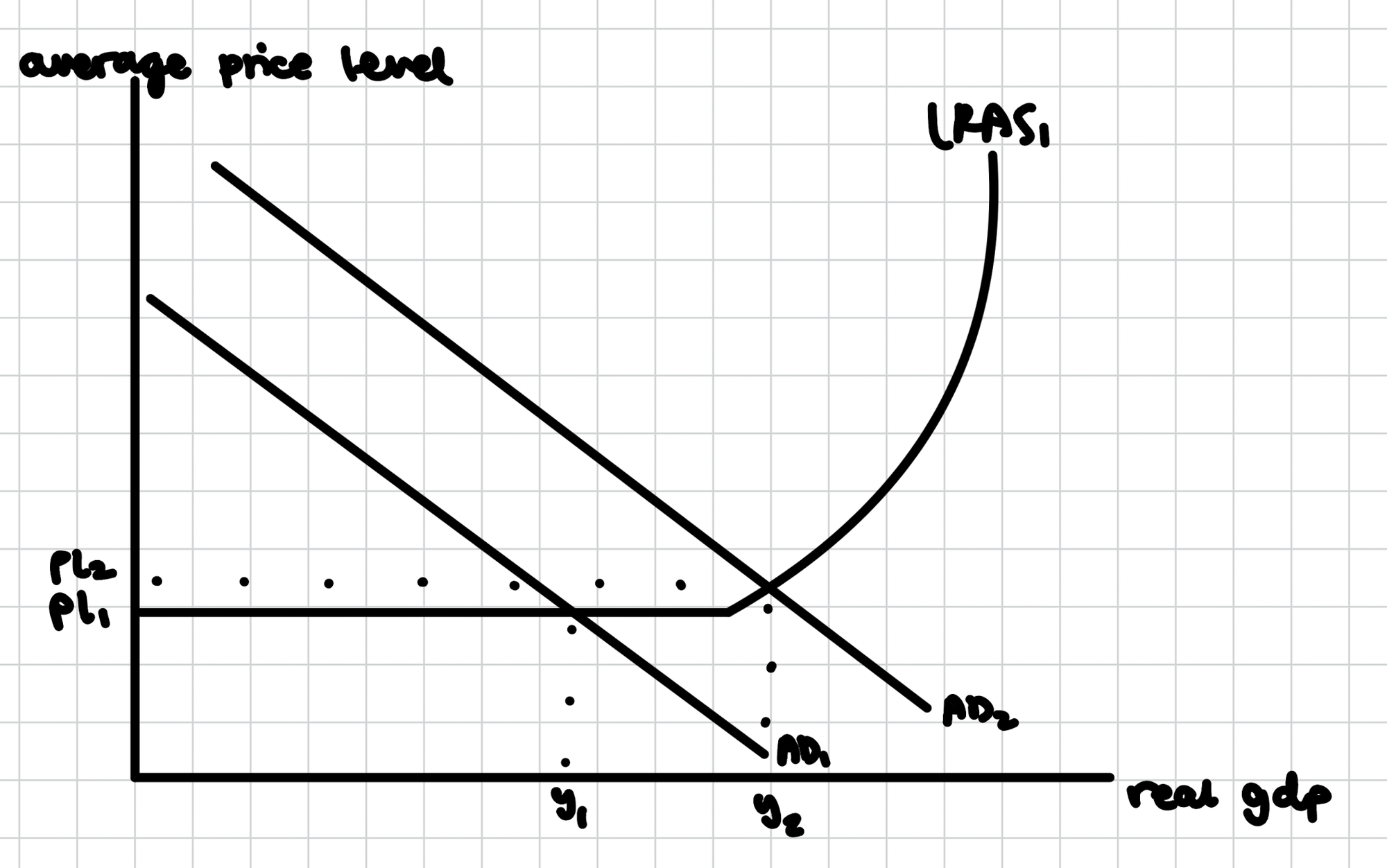
The appropriate use of supply-side policies
- It is also possible to reduce inflation without causing a fall in economic growth, through the use of supply-side policies.
- For example, if the government has implemented policies such as increased spending on infrastructure, this allows businesses to increase their productivity.
- This means that the productive potential of the economy increases, which means that a positive output gap can be avoided and inflationary pressure can fall.
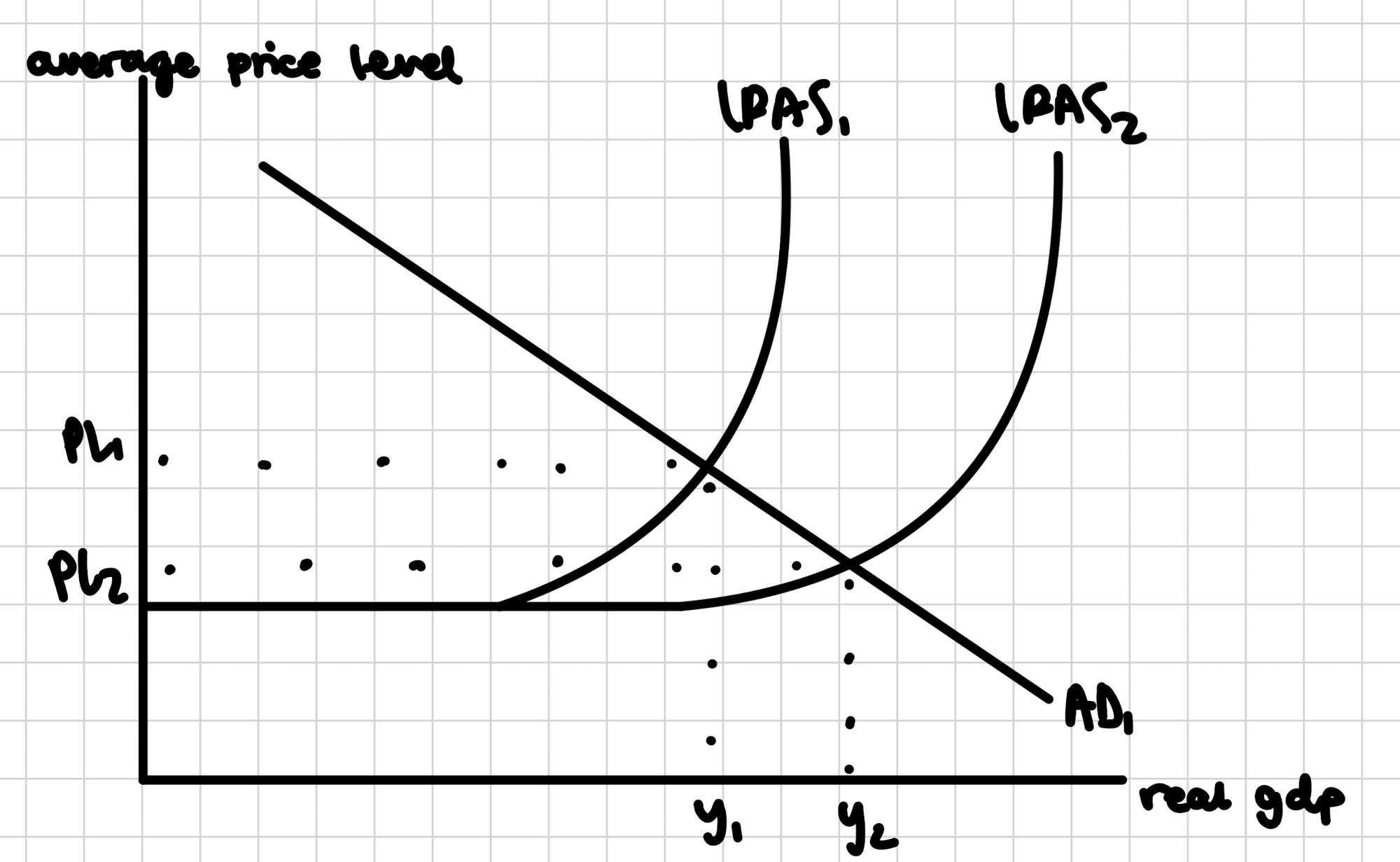
Increased investment in capital goods
Example: However, higher rates of economic growth may not cause an increase in demand-pull inflation, especially if investment is hig. During periods of economic growth, business confidence is greater, and there is more of an incentive for profit-maximising businesses to invest in capital to meet increases in demand. (This is known as the accelerator effect). More spending on capital leads to greater productivity, which leads to the UK goods and services becoming more competitive, leading to an increase in the trend rate of economic growth, which can be seen by an increase in long-run aggregate supply.
Evaluate the trade-off between economic growth and the current account.
- An increase in economic growth can cause the current account deficit to worsen.
- A current account deficit is when the value of money leaving the country is greater than the value of money entering the country.
- Economic growth is when there is an increase in real GDP.
- As the economy grows, incomes and consumer confidence increases.
- This leads to an increase in the marginal propensity to import, due to a greater demand for luxury goods and travel increases.
- This leads to an increase in imports.
- Additionally, as economic growth can cause inflation due to increases in aggregate demand, which causes an increase in demand-pull inflation in the UK.
- This causes UK goods and services to become less competitive, causing exports to fall.
This trade-off depends on:
- Other factors affecting UK competitiveness
- Exchange rates
- Productivity
- Use of supply-side policies
Example: However, higher rates of economic growth may not cause a current account deficit to increase, especially if investment is high or if supply-side policies are used. During periods of economic growth, business confidence is greater, and there is more of an incentive for profit-maximising businesses to invest in capital to meet increases in demand. (This is known as the accelerator effect). More spending on capital leads to greater productivity, which leads to the UK goods and services becoming more competitive, leading to an increase in the trend rate of economic growth. As inflation is less likely to increase, this keeps UK competitiveness high and allows exports to remain higher.
Evaluate the trade-off between economic growth and the environment.
This trade-off depends on:
Evaluate the trade-off between economic growth and income inequality.
- Increases in economic growth can cause inequality to increase.
- As the economy grows, incomes rise, causing demand-pull inflationary pressure.
- As inflation increases, workers will demand higher wages which can trigger a wage-price spiral.
- As prices increase, wages of high skilled workers are likely to increase faster than low-skilled workers, causing inequality to increase.
- This can be seen by the Lorenz curve shifting further away from the line of perfect equality.
This trade-off depends on:
- However, as the economy grows, consumer spending increases.
- As the demand for goods and services increases, demand for workers also increases, creating jobs and reducing levels of cyclical unemployment.
- This means relative poverty falls.
- Additionally, tax and benefits system can be set up in a way that high earners get taxed progressively more as their pay increases whilst low earners are able to increase their real incomes faster.
Evaluate the trade-off between low unemployment and inflation.
- A decrease in cyclical unemployment causes an increase in inflation.
- Demand for goods and services increases during an economic recovery.
- This causes demand for workers to increase.
- This leads to an increase in the number of people working and an increase in incomes.
- This can lead to an increase in aggregate demand, which causes demand-pull inflation.
This trade-off depends on:
- The state of the economy
Evaluate the trade-off between low inflation and economic growth.
- Disinflation is likely to cause economic growth to slow down if it occurs through a decrease in aggregate demand.
- For example, an increase in interest rates can be used to control inflation.
- This causes cost of borrowing and reward for saving to increase.
- This can cause a decrease in consumer spending and business spending, which can cause aggregate demand to decrease, which causes a fall in real gdp as less goods and services are to be produced.
This trade-off depends on:
- The state of the economy
- The use of supply-side policies
Evaluate the trade-off between low inflation and unemployment.
- A decrease in the rate of inflation can cause an increase in cyclical unemployment if it occurs through a decrease in aggregate demand.
- For example, if the central bank increases interest rates, this causes the cost of borrowing and the reward for saving to increase.
- This causes consumer and business spending to fall, which causes a fall in aggregate demand.
- A fall in demand for goods and services causes a fall in demand for workers, causing cyclical unemployment to increase.
This trade-off depends on:
- The state of the economy.
- The types of unemployment.
Evaluate the trade-off between low inflation and the current account.
- Controlling inflation through higher interest rates can cause the current account deficit to worsen.
- Higher interest rates causes an increase in the reward for saving.
- This causes hot money flows into the economy.
- As there is an increase in the demand for the pound and a decrease in the supply of the pound, this causes the pound to appreciate.
- This causes imports to become cheaper and exports to become more expensive.
- This causes the current account deficit to worsen.
This trade-off depends on:
- Other factors affecting competitiveness:
- Price level
- Productivity
Example: However, as inflation falls, UK goods and services become more competitive, making exports cheaper. Additionally, if disinflation is achieved through supply-side improvements, this suggests that productivity and investment has increased in the UK. This means that the quality of goods and services has increased, making exports more attractive.