Explain why a rise in the pound sterling exchange rate is likely to affect the rate of inflation in the UK
AQA AS-Level Paper 2 June 2016 Insert
Extract B (lines 6 to 8) states ‘The weakness in global energy prices and food prices combined with the recent appreciation in the pound sterling exchange rate help to explain the recent fall in inflation in the UK.’
Explain why a rise in the pound sterling exchange rate is likely to affect the rate of inflation in the UK. (10 marks)
Inflation is an increase in the average price level. Exchange rates are the price of a currency in terms of another. A currency appreciation means that the value of the currency has increased. This is likely to cause a fall in the rate of inflation for two reasons.
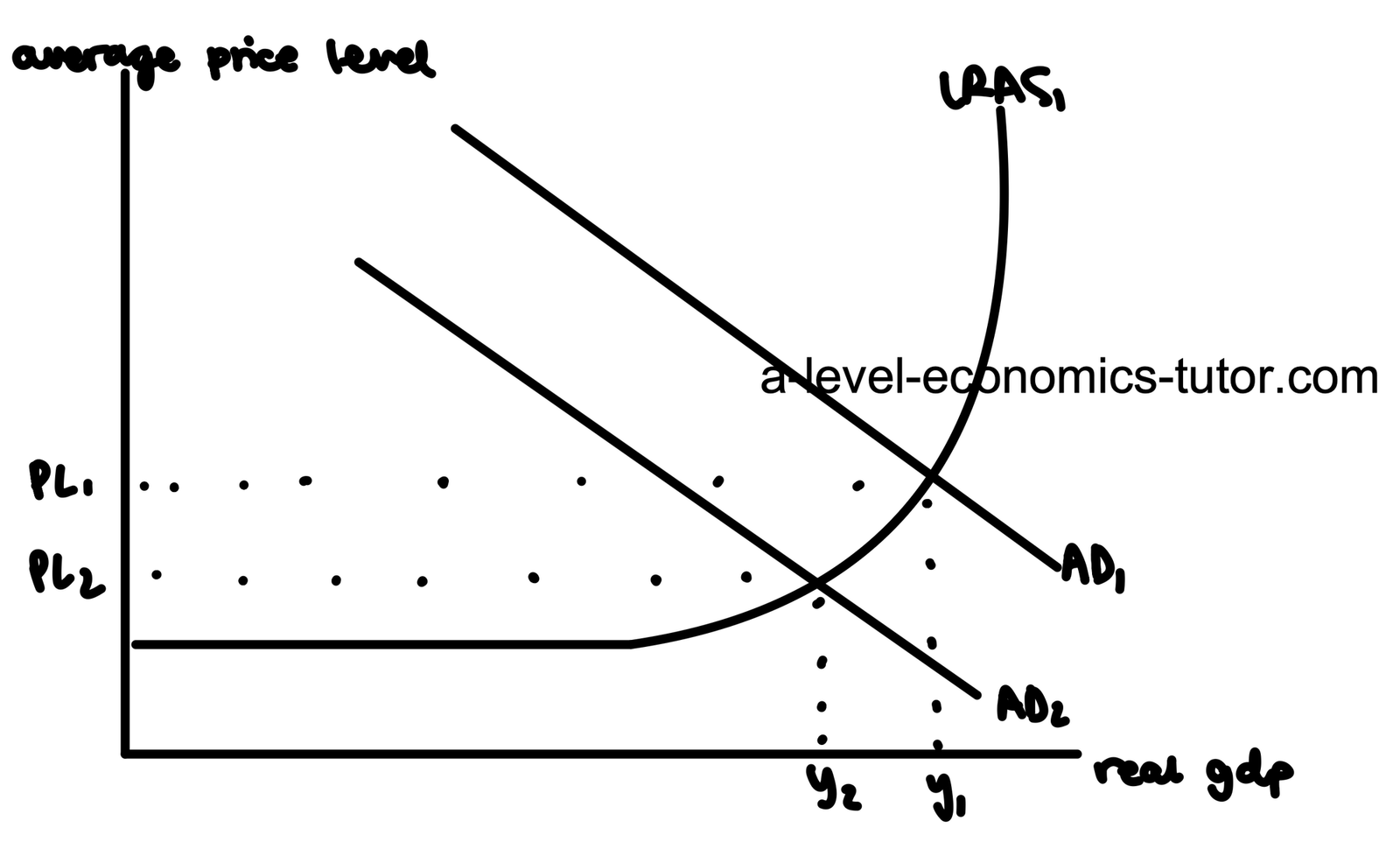
Firstly, a stronger pound makes imports cheaper and exports more expensive. This would cause the trade balance (X-M) to worsen, and this would cause aggregate demand (AD) to shift to the left, as (X-M) is a component of AD.
Additionally, firms should face lower costs of production, as a stronger currency makes it cheaper to import raw materials. As raw materials like oil become cheaper to import, firms are able to pass down these lower costs to consumers. Line 1 mentions falling energy and food prices. A fall in costs of production would cause short-run aggregate supply to shift to the right.
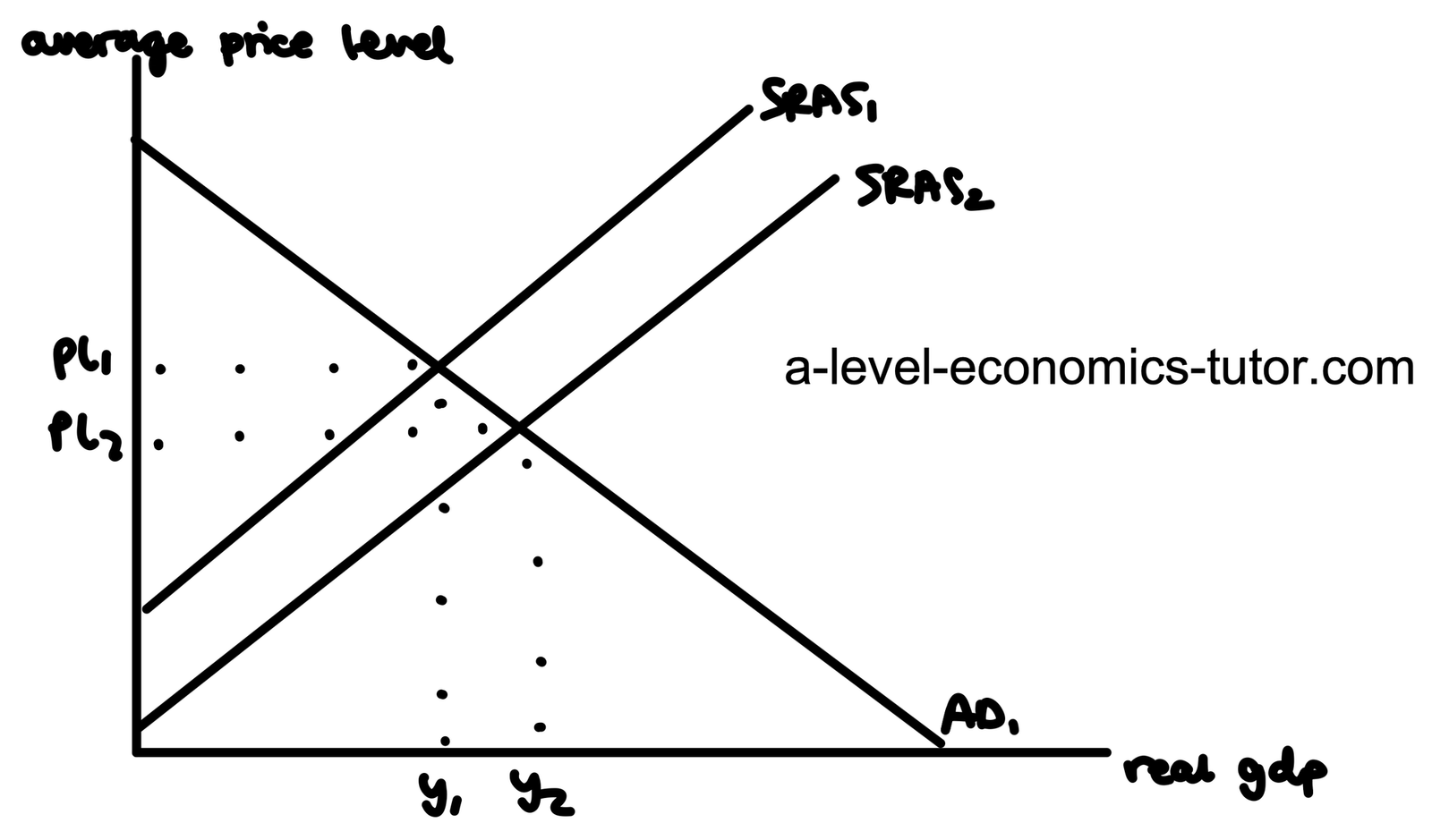
Overall, a fall in aggregate demand and an increase in short-run aggregate supply means that there will be less demand chasing more goods and services, causing a fall in inflationary pressure.
A-Level Economics Tutoring
I offer one-to-one and small group A-Level Economics tutoring for students across the UK and internationally. With 100+ five-star Google reviews and tutoring experience since 2017, I specialise in helping students understand difficult concepts and improve their exam technique.