Explain how a floating exchange rate may help to correct a trade surplus
AQA A-Level Economics Paper 2 June 2018
Extract C (lines 8–9) states ‘Trade deficits and surpluses may be selfcorrecting in a floating exchange rate system.’
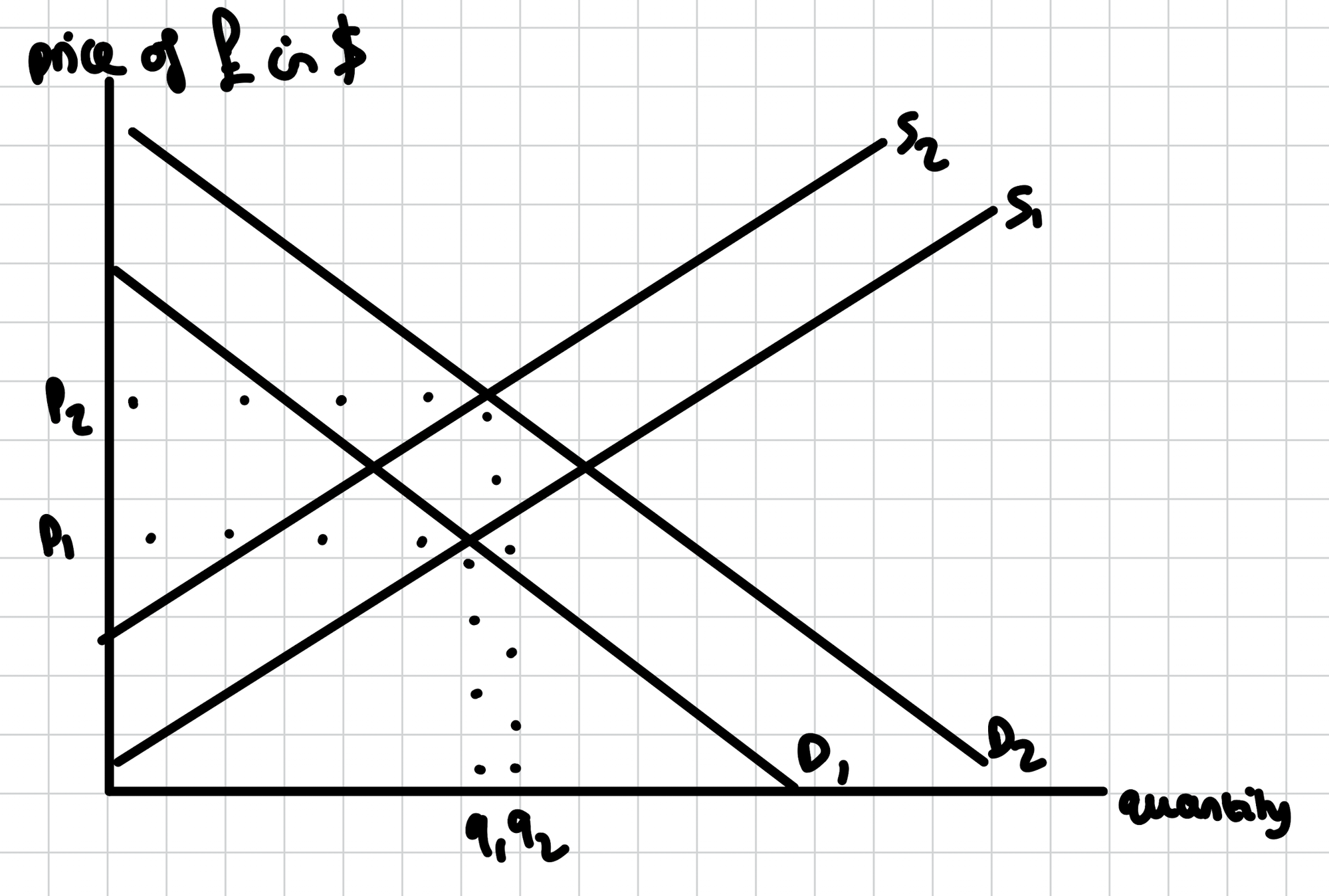
With the help of a diagram showing the supply of and demand for a currency, explain how a floating exchange rate may help to correct a trade surplus. (9 marks)
- Exchange rates are the price of a currency in terms of another.
- In a floating exchange rate system, the value of the currency is determined by market forces (demand and supply).
- A trade surplus means that the value of exports exceed the value of imports.
- If UK exports increase, there is a greater demand for UK goods, and therefore a greater demand for the pound.
- If imports into the UK decrease, there is a lower demand for foreign goods, and therefore a lower demand for the foreign currency, and therefore a lower supply of the pound.
- As demand for the pound increases and supply of the pound falls, the value of the pound increases from p1 to p2.
- As the pound appreciates, imports become cheaper and exports become more expensive.
- This means that imports are likely to increase and exports are likely to fall, causing the trade surplus to fall.
A-Level Economics Tutoring
I offer one-to-one and small group A-Level Economics tutoring for students across the UK and internationally. With 87+ five-star Google reviews and tutoring experience since 2017, I specialise in helping students understand difficult concepts and improve their exam technique.