Explain the effects of inflation
High inflation can be damaging to individuals as it can worsen their living standards. Inflation is when there is an increase in the average price level. A high rate of inflation means it is likely that prices are rising faster than wages. This means that real wages are falling, meaning that people can consume less goods and services. This means they can satisfy less of their needs and wants, meaning their living standards are worsening.
High inflation can be damaging to the economy as it can lead to a wage-price spiral. Inflation is when there is an increase in the average price level. A high rate of inflation means that it is likely that prices are rising faster than wages. This means that real incomes are falling, which means that consumers will be unable to satisfy as many of their needs and wants. This means that workers are likely to bargain for higher wages. This means that firms will have higher costs of production. This will lead to a decrease in short-run aggregate supply in the economy as firms will be willing to produce fewer goods and services at each price level due to lower profit margins. This leads to cost-push inflation, which reinforces the wage-price spiral.
One advantage of high inflation is that it is a sign of economic growth and reinforces further economic growth. Demand-pull inflation in particular happens when there is an increase in aggregate demand as this means that firms must raise prices as there is too much demand chasing too few goods and services. This leads to an increase in the average price level but it also suggests that the economy is growing closer to its productive potential. Additionally, higher levels of inflation means that rational consumers form an expectation that prices will continue to rise. This encourages them to continue to spend on goods and services rather than delay spending. This causes further economic growth as it leads to an increase in the value of goods and services being produced. The government can minimise the trade-off between economic growth and high inflation by implementing supply-side policies, which allows the productive potential to increase.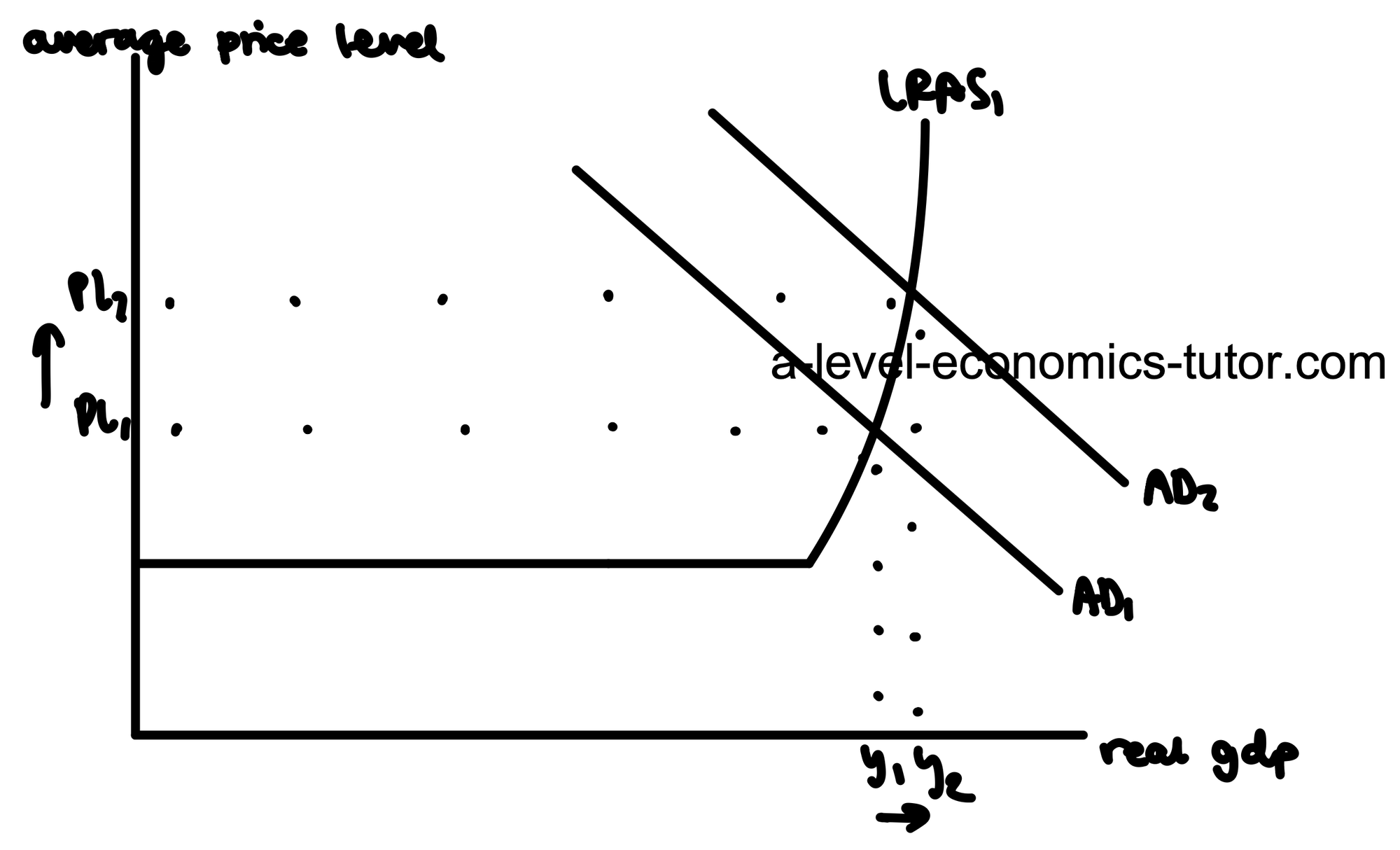
One possible advantage of inflation is that it makes it easier for the government to reduce debt. This is because it reduces the real value of debt whilst it also allows the government to increase tax revenue. Inflation occurs when there is an increase in the average price level. Firstly, the real value of debt falls as the government bonds that lenders have bought are now worth less in real terms. Secondly, the tax revenue from both direct and indirect taxes should increase. In the case of demand-pull inflation, there is an increase in aggregate demand. This causes average prices to increase as there is more demand chasing the same goods and services. The government can collect more income tax due to fiscal drag. This is when workers negotiate pay rises due to inflation. This means that many workers will enter a higher income tax band. Income taxes are progressive in the UK meaning that as income increases the proportion of income that is taxed increases. Therefore, income tax revenue should increase. Additionally, as firms increase prices, the government can collect more revenue through indirect taxes like VAT which is 20% on most goods and services. Finally if the economy grows, businesses should be able to make more profits, which would allow the government to collect more through corporation tax. This is assuming that the government do not adjust any tax bands immediately.
A-Level Economics Tutoring
I offer one-to-one and small group A-Level Economics tutoring for students across the UK and internationally. With 87+ five-star Google reviews and tutoring experience since 2017, I specialise in helping students understand difficult concepts and improve their exam technique.