Discuss the advantages and disadvantages of monopoly power
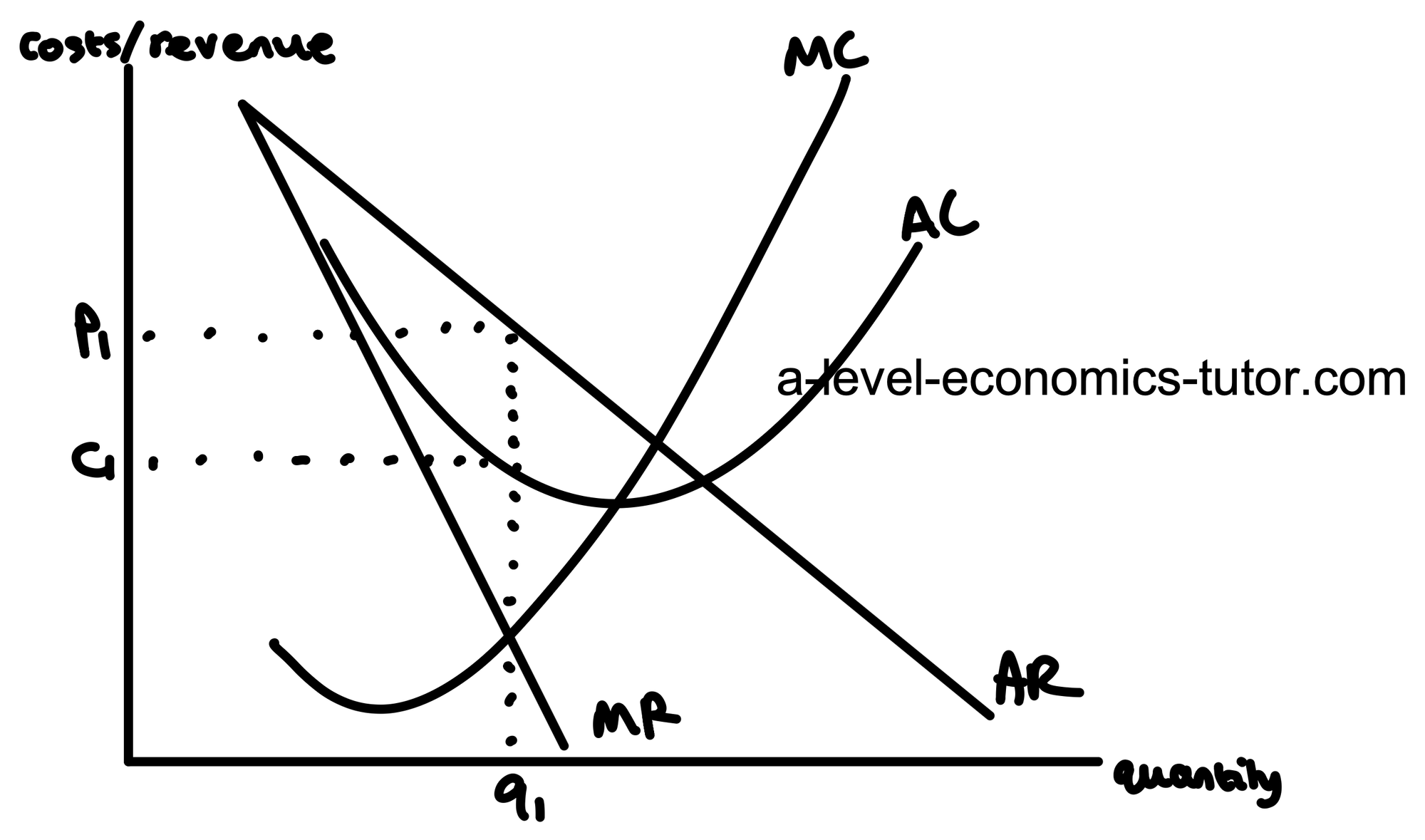
A monopoly is unlikely to achieve allocative efficiency. Allocative efficiency can be achieved when firms are producing at the point where price = marginal cost (AR = MC). This is beneficial because, if firms are producing at this point, society can benefit from higher output and a lower price compared to where most firms produce. This leads to an increase in consumer surplus being enjoyed - which is the difference between what consumers actually pay and the highest price they would have been willing to pay for the good or service. In comparison, monopolies aim to maximise profits and they can do this by producing at the point where marginal cost = marginal revenue (MC = MR). This is because any extra unit after this point q1 will lead to a bigger increase in total costs compared to the increase in total revenue and so total profit would decrease. As a result, the price charged by the monopoly is greater than the marginal cost. Monopolies have no incentive to increase output any further so consumer surplus and social welfare are not maximised. Overall, it is unlikely that monopolies achieve allocative efficiency.
Monopolies are likely to achieve dynamic efficiency. Dynamic efficiency can be achieved when firms are able to reduce costs and improve and innovate their products over time. Dynamic efficiency can be achieved when firms are making supernormal profits in the long run. This means that the firm is able to cover their costs and opportunity costs and make extra profit on top. This means that they have the ability to reinvest consistently. For example, Apple have reinvested their profits and innovated their products; such as improving their headphones and offering AirPods which can now also serve as hearing aids. Over time, customers can benefit from greater satisfaction. Therefore, customers would be willing to pay more for Apple products, so they can possibly enjoy greater levels of consumer surplus, leading to an increase in social welfare. At the same time, increased product differentiation can allow firms like Apple to maintain or gain even greater market share, making improvements even more sustainable over time.
Monopolies are unlikely to achieve productive efficiency. Productive efficiency can be achieved when firms are producing at the lowest point of their average costs curve (MC = AC). When producing at this point, it is impossible for a firm to produce one more of any good or service without producing less of another good or service. On a macroeconomic scale, if more firms are achieving productive efficiency, the economy produces closer to its productive potential. Monopolies aim to maximise profits and they can do this by producing at the point where marginal cost = marginal revenue (MC = MR). This is because any extra unit after this point q1 will lead to a bigger increase in total costs compared to the increase in total revenue and so total profit would decrease. At this level of output, the firm is not able to minimise their average costs. Additionally, output is still too low for the firm to fully exploit their economies of scale. For example, firms cannot achieve the full cost advantage from bulk buying materials or from hiring specialist managers to oversee a greater number of staff at once. Overall, monopolies are unlikely to fully achieve productive efficiency as it is unlikely for them to produce near the lowest point of their average costs curve.
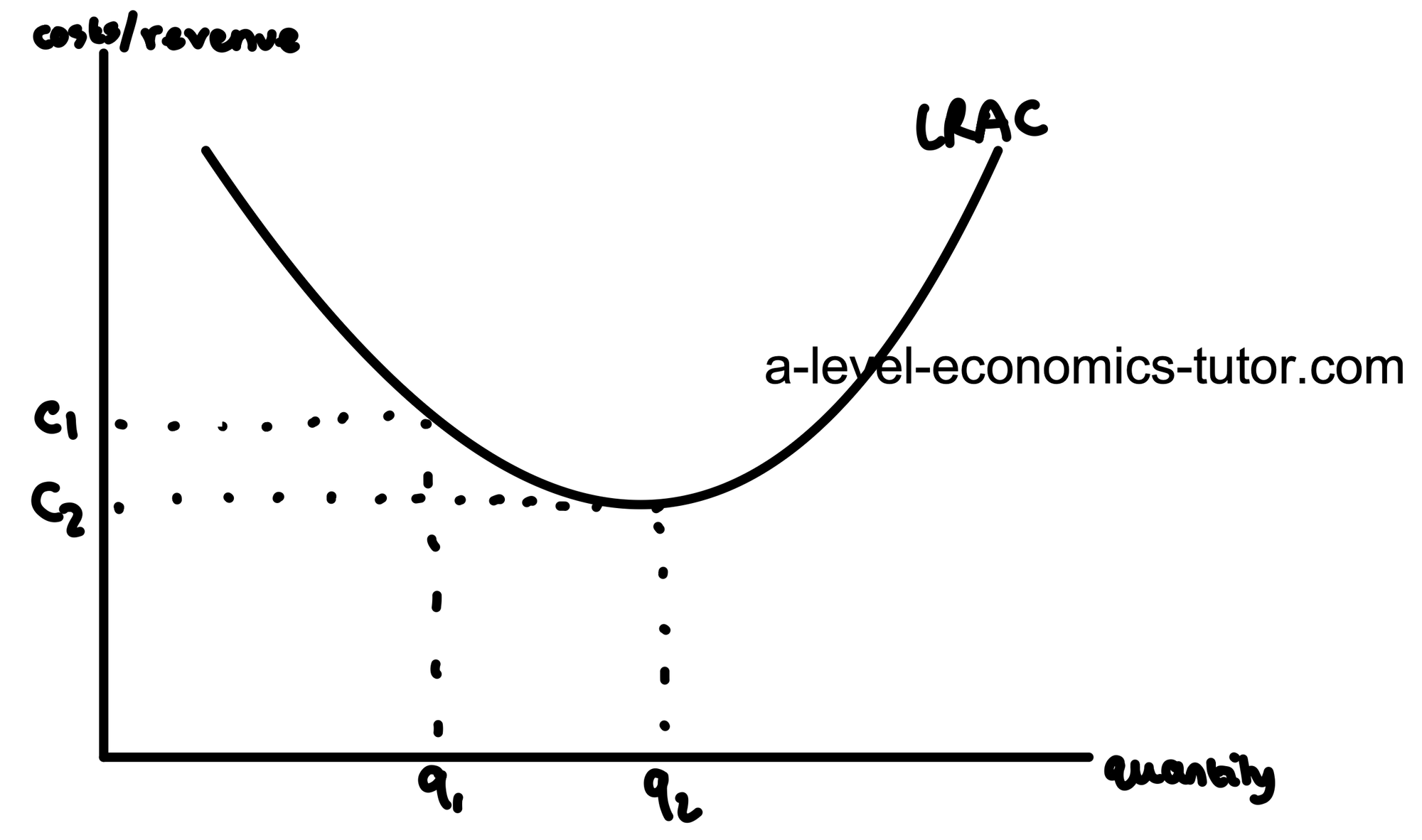
Monopolies are likely to achieve some degree of productive efficiency due to economies of scale. In comparison to firms in a more competitive market, monopolies have a much greater market share due to their high degree of product differentiation and high barriers to entry. Therefore, monopolies can enjoy higher revenue and produce a higher output compared to a firm who has a very low market share and is competing on price with many other firms. Therefore, firms can enjoy more economies of scale, which are when long-run average costs fall as output increases. For example, firms like Apple can enjoy a cost advantage compared to smaller firms by bulk-buying and hiring specialist managers to oversee more work at once. The diagram shows their costs falling from c1 to c2 as a result of high output. This can allow firms with monopoly power to make greater profit and reinvest more, allowing consumers to benefit from innovation and improvement. Lower costs can also allow the firms to pass down lower prices to consumers, leading to greater consumer surplus.