Trade | A-Level Economics Notes
These revision notes cover everything you need to know about Trade for A-Level Economics. They're designed for students studying AQA A-Level Economics, Edexcel A-Level Economics, and Edexcel International A-Level Economics. Written by Jaisul Naik, UCL Economics graduate and A-Level Economics tutor since 2017.
What is free trade?
Free trade is the act of trading goods and services without protectionist measures.
What is protectionism?
Protectionism are barriers that restrict trade.
What is a tariff?
A tariff is a tax on imports.
What is a quota?
A quota is a physical limit on the quantity of imports
What is an export subsidy?
Subsidies are payments given to domestic producers to allow them to reduce their costs of production. This should make the country’s products more internationally competitive.
What is a free trade area?
A free trade area is an agreement between countries to trade without any protectionist measures.
What is a customs union?
A customs union is an agreement where members agree to trade without any protectionist measures, as well as impose a common external tariff (a tariff on non-members).
What is a common market?
A common market is the same as a customs union, but there is also free movement of factors of production (including workers).
What is a currency union?
A currence union is an agreement for members to share the same currency. This means they must share the same central bank and same interest rates.
Tariff diagram
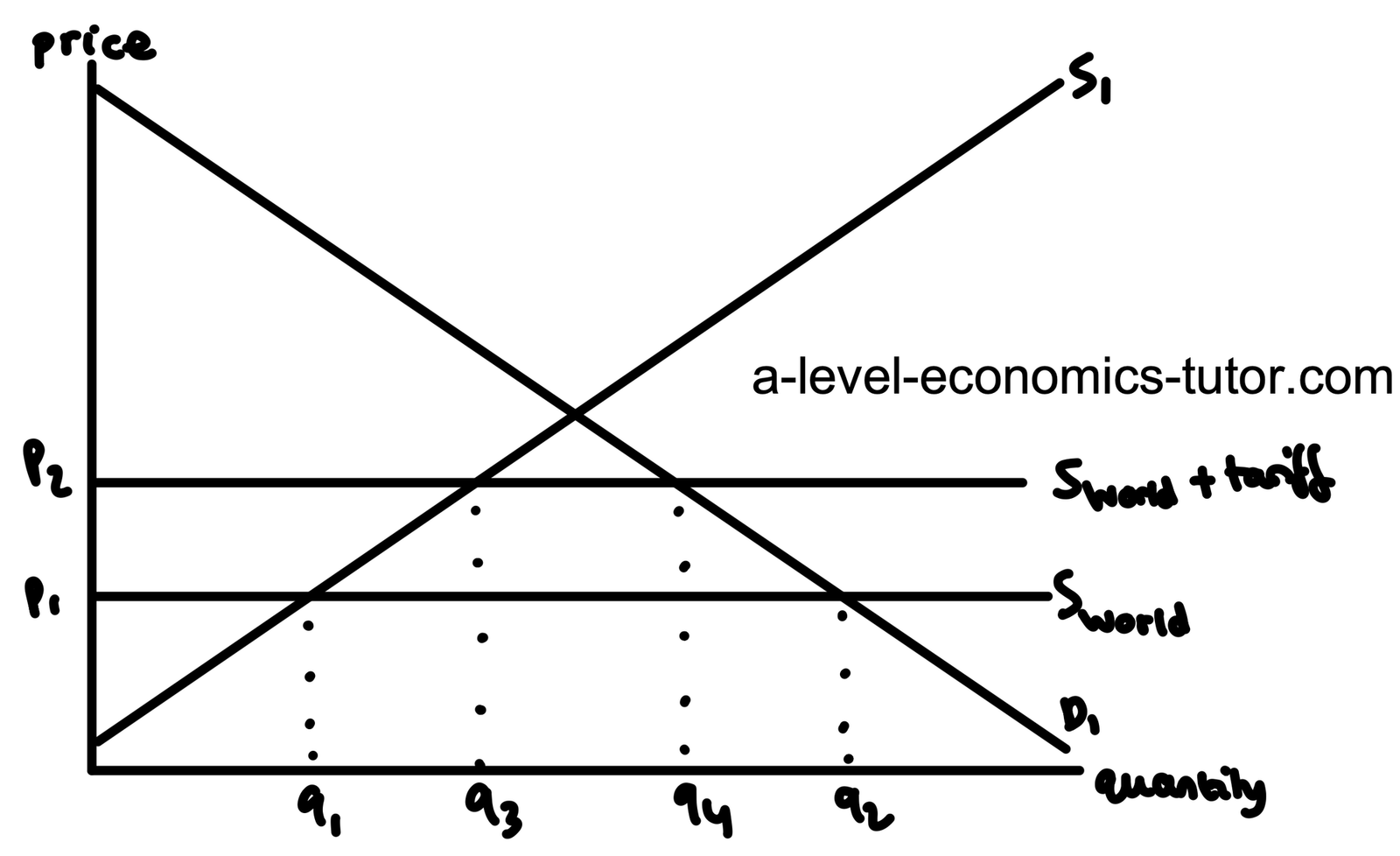
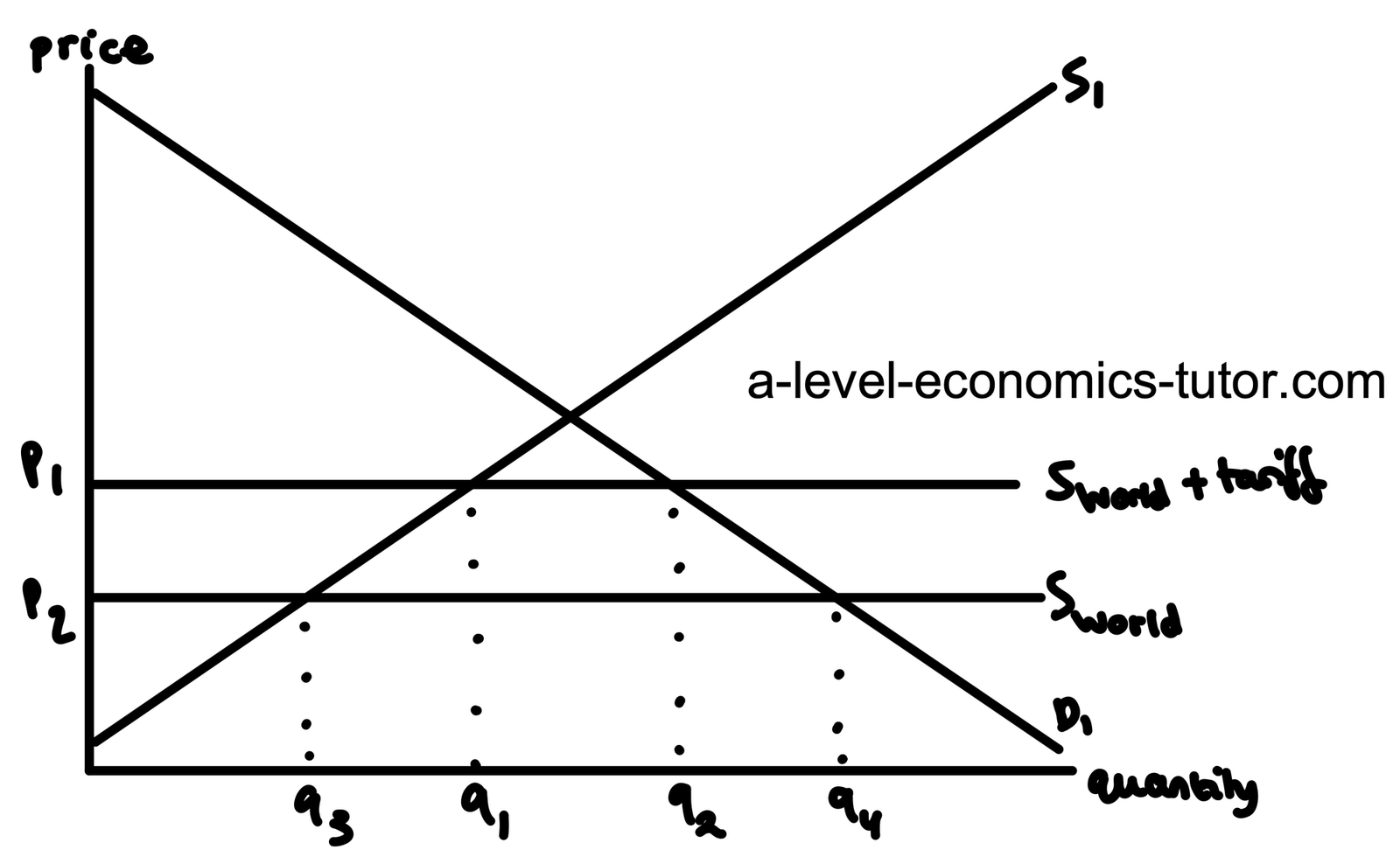
Tariff removal diagram
What are two advantages of free trade?
Two of the main advantages of free trade are:
- an increase in total output due to specialisation (comparative advantage model)
- a fall in prices (tariff removal diagram)