Price Mechanism | A-Level Economics Notes
These revision notes cover everything you need to know about the Price Mechanism for A-Level Economics. They're designed for students studying AQA A-Level Economics, Edexcel A-Level Economics, and Edexcel International A-Level Economics. Written by Jaisul Naik, UCL Economics graduate and A-Level Economics tutor since 2017.
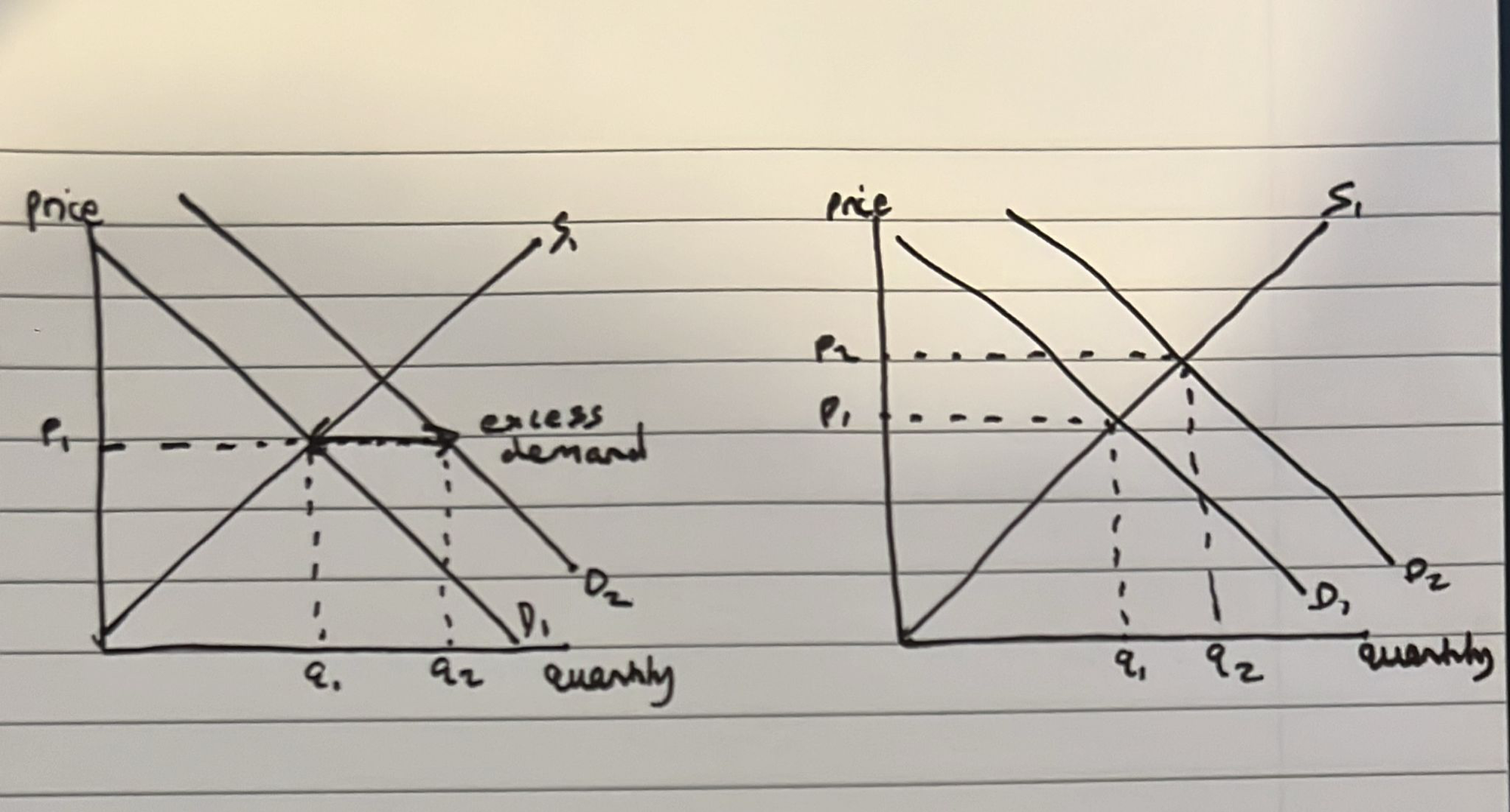
Excess demand
- the market sends a signal to producers that there is excess demand in the market.
- producers respond by raising prices.
- a higher price means that there will be a contraction in demand and an expansion in supply.
- the contraction in demand is the rationing function of the price mechanism as it allows the market to move back to an equilibrium.
- also, it is the incentive function that causes supply to expand. this happens because there is an increase in the profit available to producers, which increases the incentive for firms to produce the good or service.
Excess supply
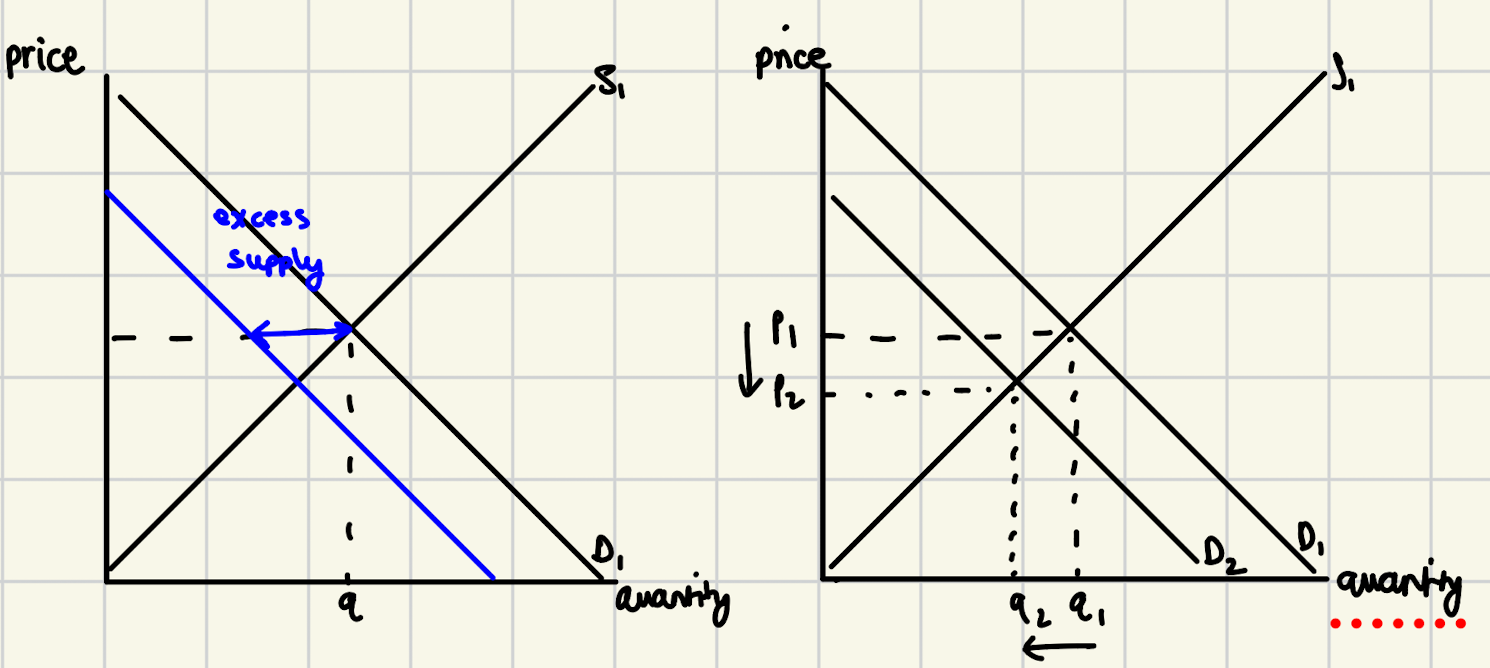
- the market sends a signal to producers that there is excess supply in the market.
- producers respond by reducing prices.
- a lower price means that there will be an expansion in demand and a contraction in supply.
- the contraction in supply is the rationing function of the price mechanism as it allows the market to move back to an equilibrium.
- also, it is the incentive function that causes supply to contract. this happens because there is a decrease in the profit available to producers, which reduces the incentive for firms to produce the good or service.
Summary questions
- How does the price mechanism respond to excess demand?
- How does the price mechanism respond to excess supply?
A-Level Economics Tutoring
I offer one-to-one and small group A-Level Economics tutoring for students across the UK and internationally. With 87+ five-star Google reviews and tutoring experience since 2017, I specialise in helping students understand difficult concepts and improve their exam technique.