Price Discrimination | A-Level Economics Notes
These revision notes cover everything you need to know about Price Discrimination for A-Level Economics. They're designed for students studying AQA A-Level Economics, Edexcel A-Level Economics, and Edexcel International A-Level Economics. Written by Jaisul Naik, UCL Economics graduate and A-Level Economics tutor since 2017.
What is price discrimination?
Price discrimination is when firms charge different prices to different customers for the same good or service. For example,
- student discounts e.g. cinema/ Apple products/ Amazon Prime
- peak vs off-peak rail travel
What is first degree price discrimination?
First degree price discrimination is when firms charge each customer the maximum price that they are willing to pay.
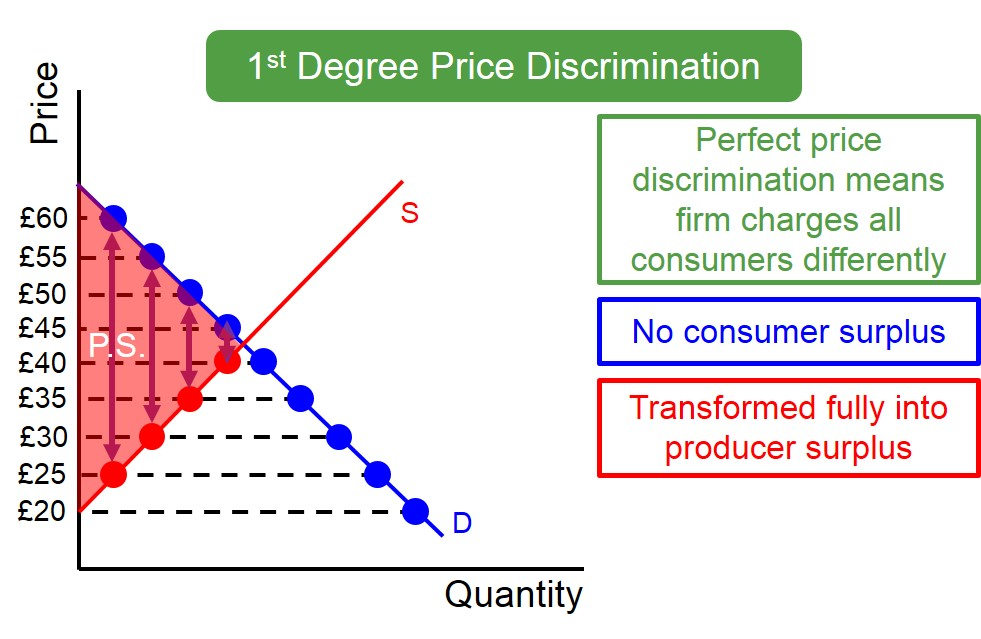
This would require firms to read the mind of every customer, which is not possible.
There would be no consumer surplus left in the market, and this would all be turned into producer surplus.
What are the conditions necessary for third degree price discrimination?
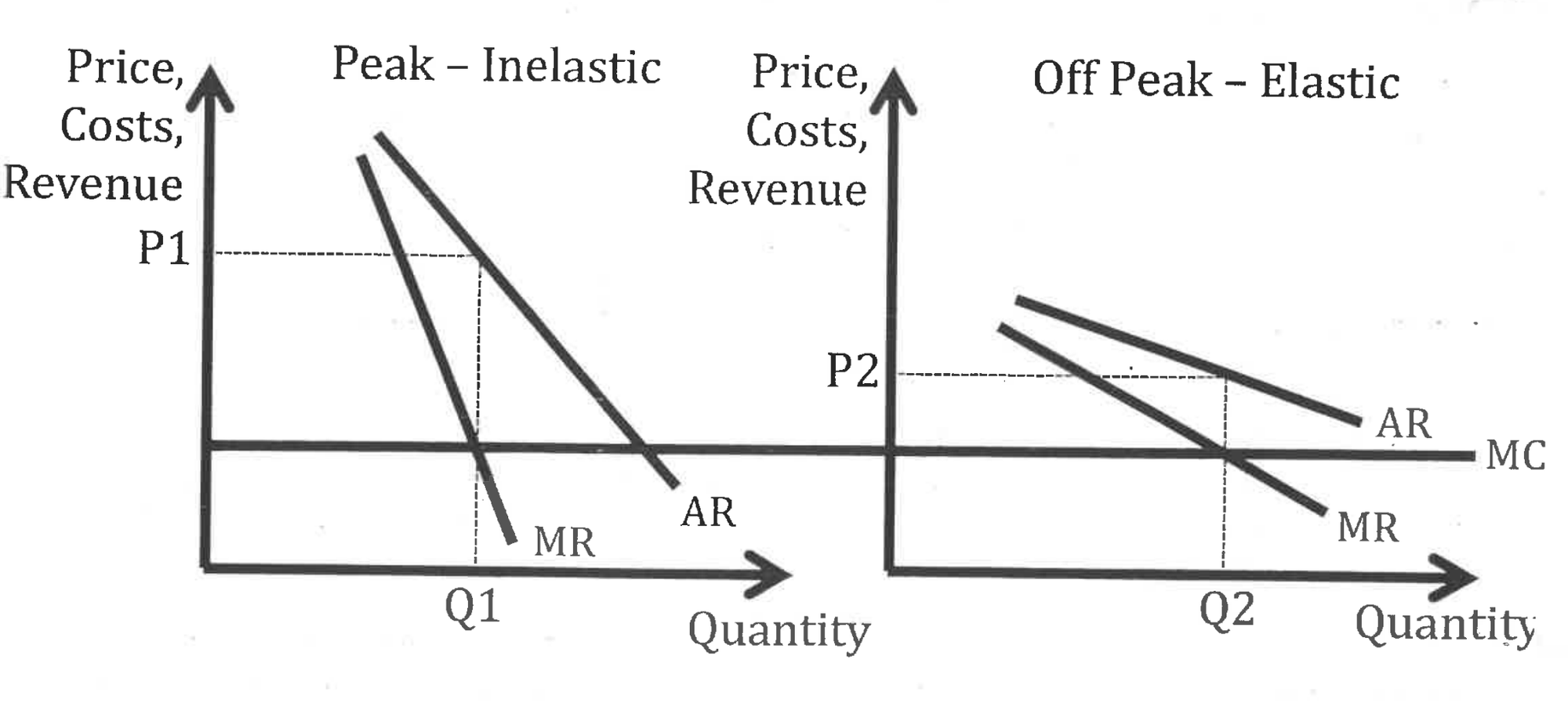
For 3rd degree price discrimination to be possible,
- firms must have monopoly power (price-setting power).
- firms must be able to identify/split customers into two or more groups, and each of the customer groups must have a different PED for the good/service.
- firms must be able to prevent seepage between the two markets.
What are the advantages of price discrimination?
- An increase in dynamic efficiency
- as output increases, long run average costs fall
- firms can increase their supernormal profit
- this allows greater investment into their goods and services.
- or, firms could pass down lower prices to consumers.
- An increase in consumer surplus for the group with a more elastic demand
- some customers would not have been willing and able to pay the price set by a monopoly
- by offering a discount, they are now able to buy the good or service
- there is an increase in consumer surplus
What are the disadvantages of price discrimination?
- allocative inefficiency
- consumers are being charged a high price
- MC does not equal AR
- price is much higher than marginal cost
- consumer surplus is low,
- especially for the group of customers with inelastic demand
Summary questions
- what is price discrimination?
- what is first degree price discrimination?
- What are the conditions necessary for third degree price discrimination?
- What are the advantages of price discrimination?
- What are the disadvantages of price discrimination?
A-Level Economics Tutoring
I offer one-to-one and small group A-Level Economics tutoring for students across the UK and internationally. With 87+ five-star Google reviews and tutoring experience since 2017, I specialise in helping students understand difficult concepts and improve their exam technique.