Explain how a shortage of labour might contribute to rising inflation
AQA AS-Level Paper 2 June 2025 Insert
Extract B (lines 6–7) states: ‘A shortage of labour is one of the factors that has contributed to rising inflation, threatening macroeconomic stability.’ Explain how a shortage of labour might contribute to rising inflation. (10 marks)
Inflation is a rise in the average price level. A shortage of labour can lead to cost-push inflation. If there are not enough applicants in most job markets, workers hold more bargaining power than firms. This means it is easier for workers to negotiate higher salaries. This means that firms would face higher costs of production. This can be illustrated with a decrease in short-run aggregate supply, which shows that firms are able to produce less goods and services at every price level. Holding other factors like aggregate demand constant, this leads to a fall in real gdp and an increase in the price level from PL1 to PL2 as shown below.
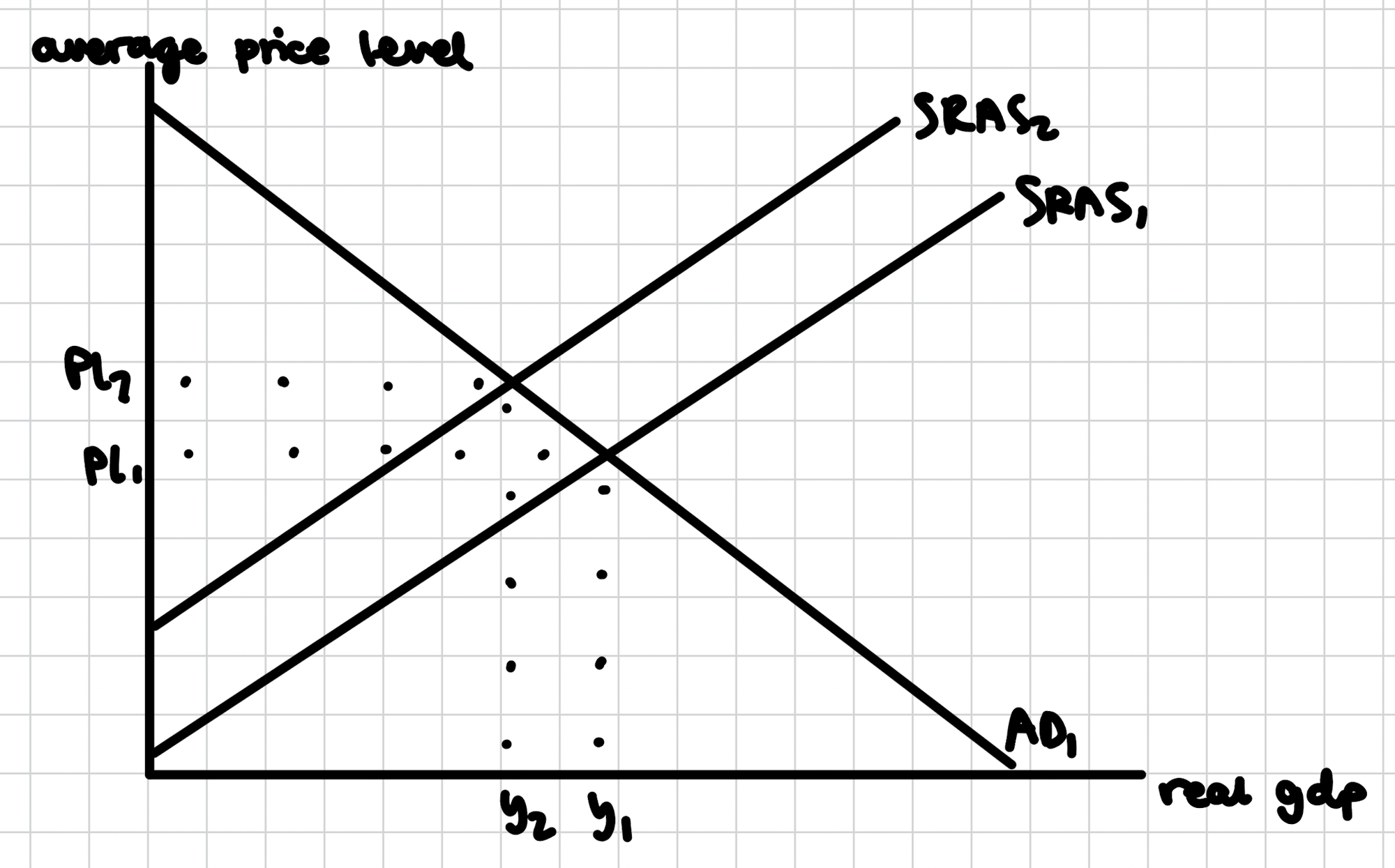
A shortage of labour can also lead to an increase in demand-pull inflation as it suggests that a greater proportion of people are already in a job. This means incomes are higher, and there is greater economic stability and greater consumer confidence. This would lead to an increase in consumer spending, which is one of the components of aggregate demand. As aggregate demand increases, the price level increases as there is greater demand chasing the same amount of goods and services, assuming aggregate supply is held constant.
A-Level Economics Tutoring
I offer one-to-one and small group A-Level Economics tutoring for students across the UK and internationally. With 87+ five-star Google reviews and tutoring experience since 2017, I specialise in helping students understand difficult concepts and improve their exam technique.