Examine two factors influencing the short‑run aggregate supply of the German economy
Edexcel A-Level Economics Paper 2 June 2025 Extract
With reference to Extract A, examine two factors influencing the short‑run aggregate supply of the German economy. (8 marks)
One factor that might have caused a decrease in short-run aggregate supply (SRAS) in the German economy could be the 'restrictions on free-trade'. One example of this might be tariffs. A tariff is a tax on imports. As imports are being taxed, it's more expensive to import them. This means that firms in Germany would have to pay more when importing raw materials such as oil. As a result their cost of production increase and this causes SRAS to shift to the left as shown in the diagram below.
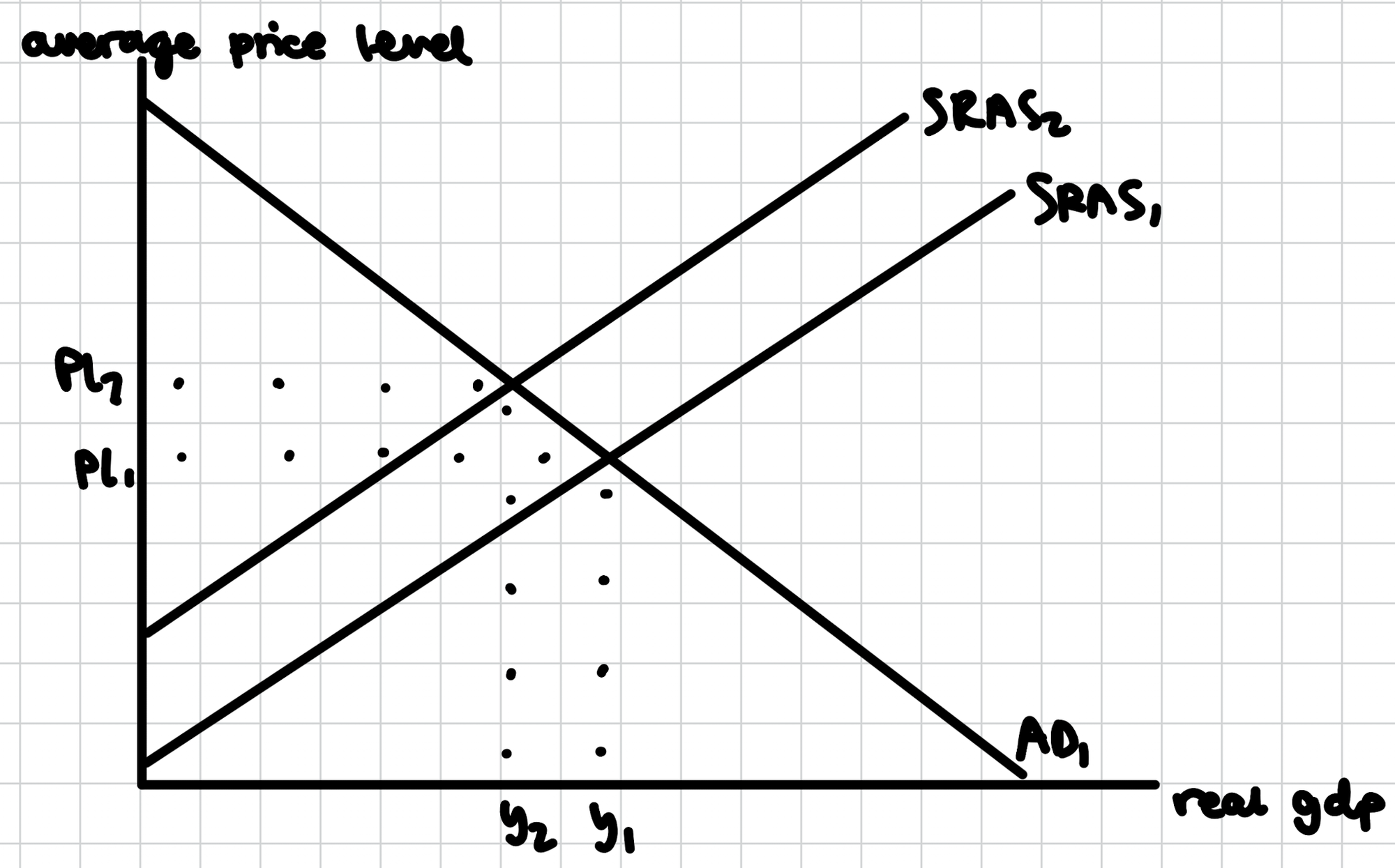
Another factor that could have caused a decrease in SRAS in the German economy might have been 'labour shortages' as mentioned in line 14. If firms do not have enough workers to choose from, this gives workers more bargaining power when it comes to wages. This means that firms must pay more wages for the same factors of production. This means it costs firms more at each unit of output leading to an increase in cost of production leading to a decrease in SRAS.
However, there are other factors that could influence SRAS in the opposite direction. For example, the German government 'aim to have renewables account for 80% of its energy supply' which would reduce their dependence on foreign energy supply. This would reduce firms' costs of production and lead to an increase in SRAS in the economy.
A-Level Economics Tutoring
I offer one-to-one and small group A-Level Economics tutoring for students across the UK and internationally. With 87+ five-star Google reviews and tutoring experience since 2017, I specialise in helping students understand difficult concepts and improve their exam technique.