Evaluate whether profit maximisation is the most realistic business objective
There are two main reasons why profit maximisation is usually the most important business objective. Firstly, profit is the entrepreneur's reward for taking the risk to own a business. This risk involves any opportunity cost involved with owning a business. For example, the business owner may have had to pay for fixed costs such as rent before producing any output, and this money might have been taken out of other investments which could have returned interest or dividends. Also, they may have sacrificed time from working in a full-time job or working on another business. Secondly, business owners can reinvest supernormal profits to grow their business further. Supernormal profits are any profits above normal profits, and normal profit is the minimum amount of profit needed to remain in the market in the long-run. Supernormal profits can be invested in capital which can lead to greater productivity and lower costs, and this can allow the business to innovate their products and increase their market share.
Profit maximisation can be achieved at the level of output q1 where marginal costs = marginal revenue (MC=MR), as shown in the diagram below. At any output below q1, marginal revenue is greater than marginal cost. This means that each extra unit of output will lead to total revenue increasing by more than total costs. This means that total profit would increase so firms are incentivised to increase output. At any output above q1, marginal costs are greater than marginal revenue. This means that if firms produce one extra unit of output, total costs will increase by more than total revenue so total profit would fall. Therefore, it is optimal for firms to produce at the point where MC=MR to maximise profits.
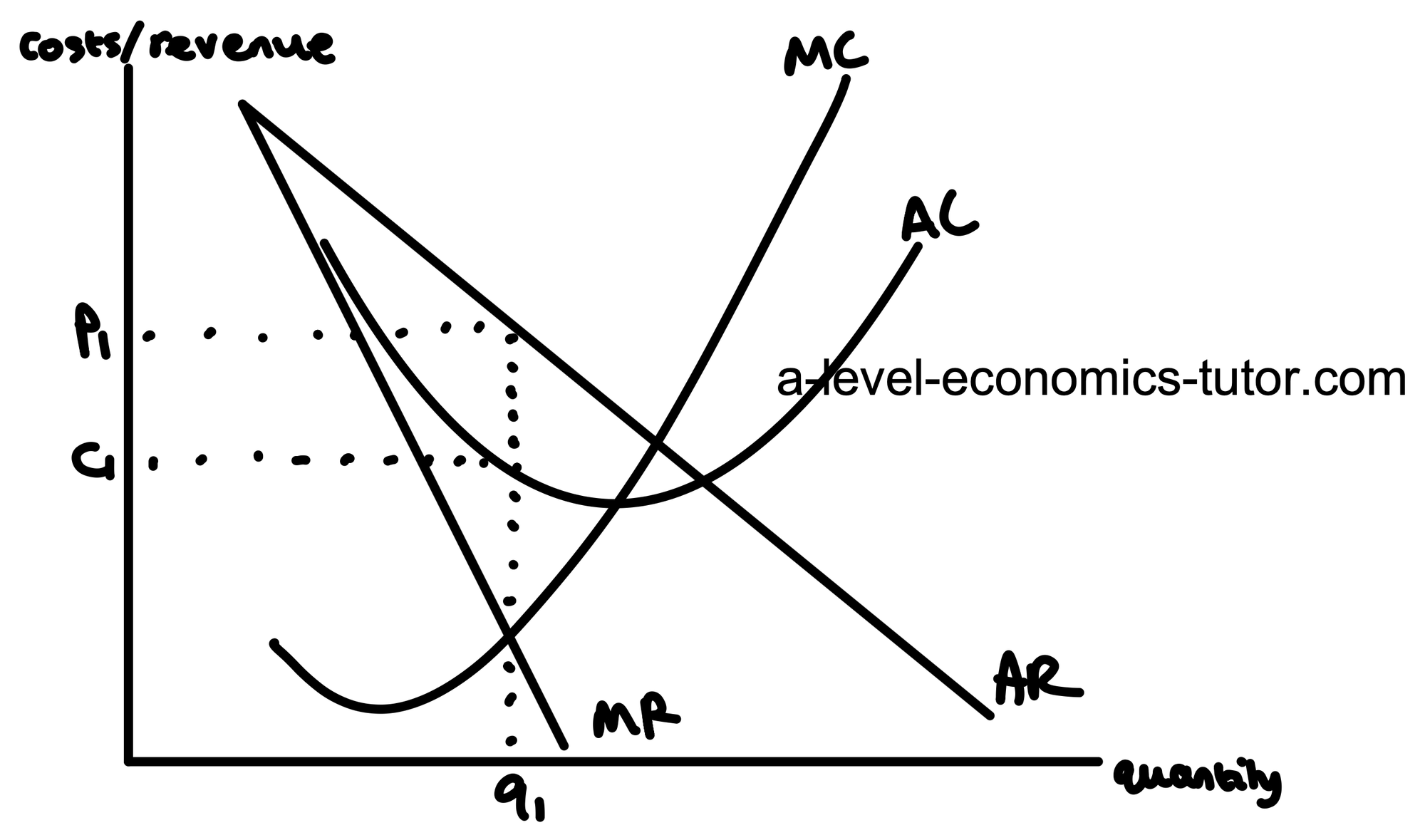
Revenue maximisation can be the most important objective for many firms as it can allow them to increase their market share and ensure long-term profitability. Revenue maximisation can be achieved at the point where marginal revenue = zero (MR=0). At this point, revenues are maximised because of the way price elasticity of demand varies along the demand curve and the extent to which firms have to reduce prices to attract more demand. By charging the price p1 and maximising revenue, as shown on the diagram below, firms can gain market share. A lower price can force smaller firms in the market to shut down if they are unable to make at least normal profit in the long-run. Firms can benefit from economies of scale and more price-making power as they increase their market share, and most importantly this can allow them to maximise their profits.
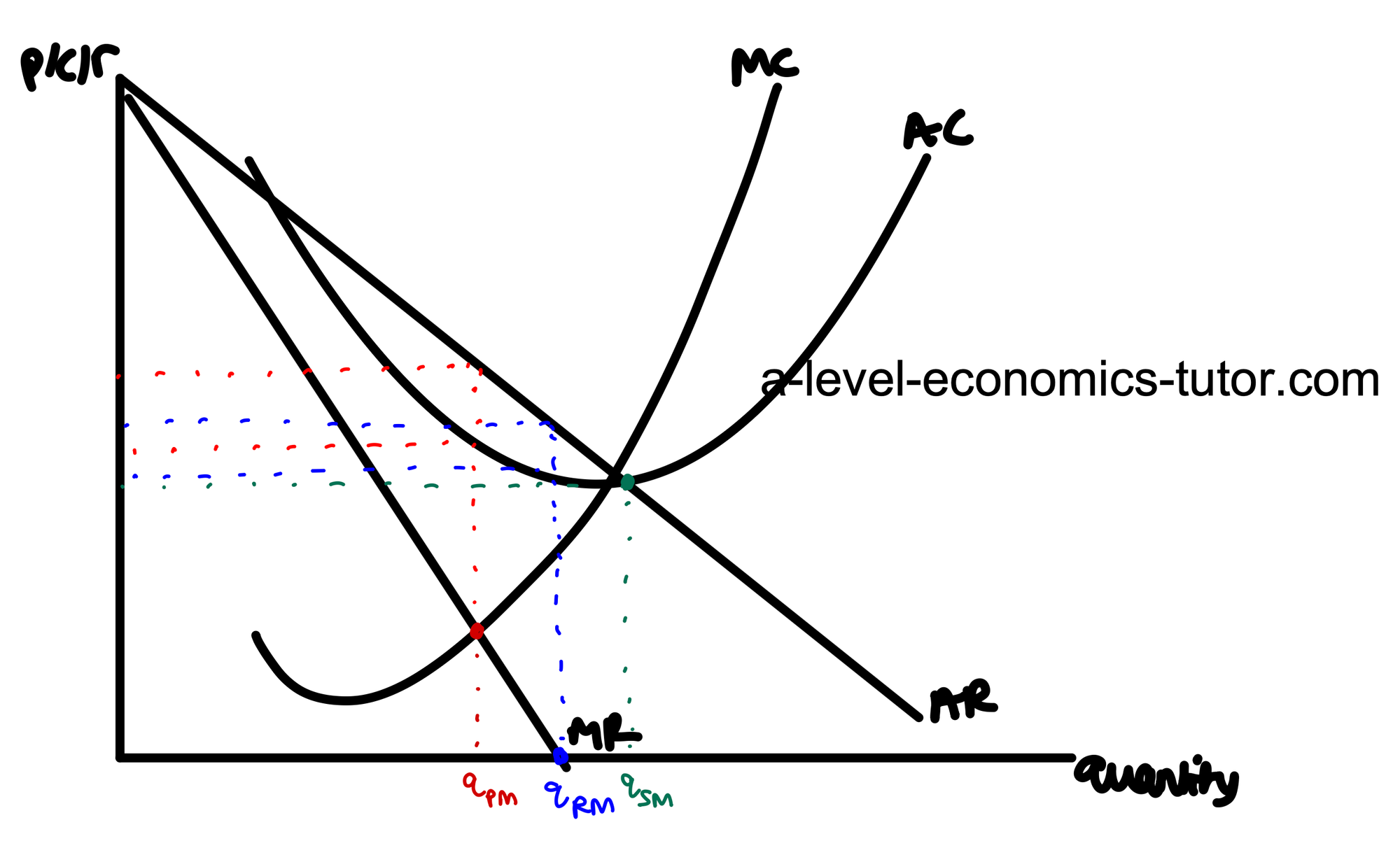
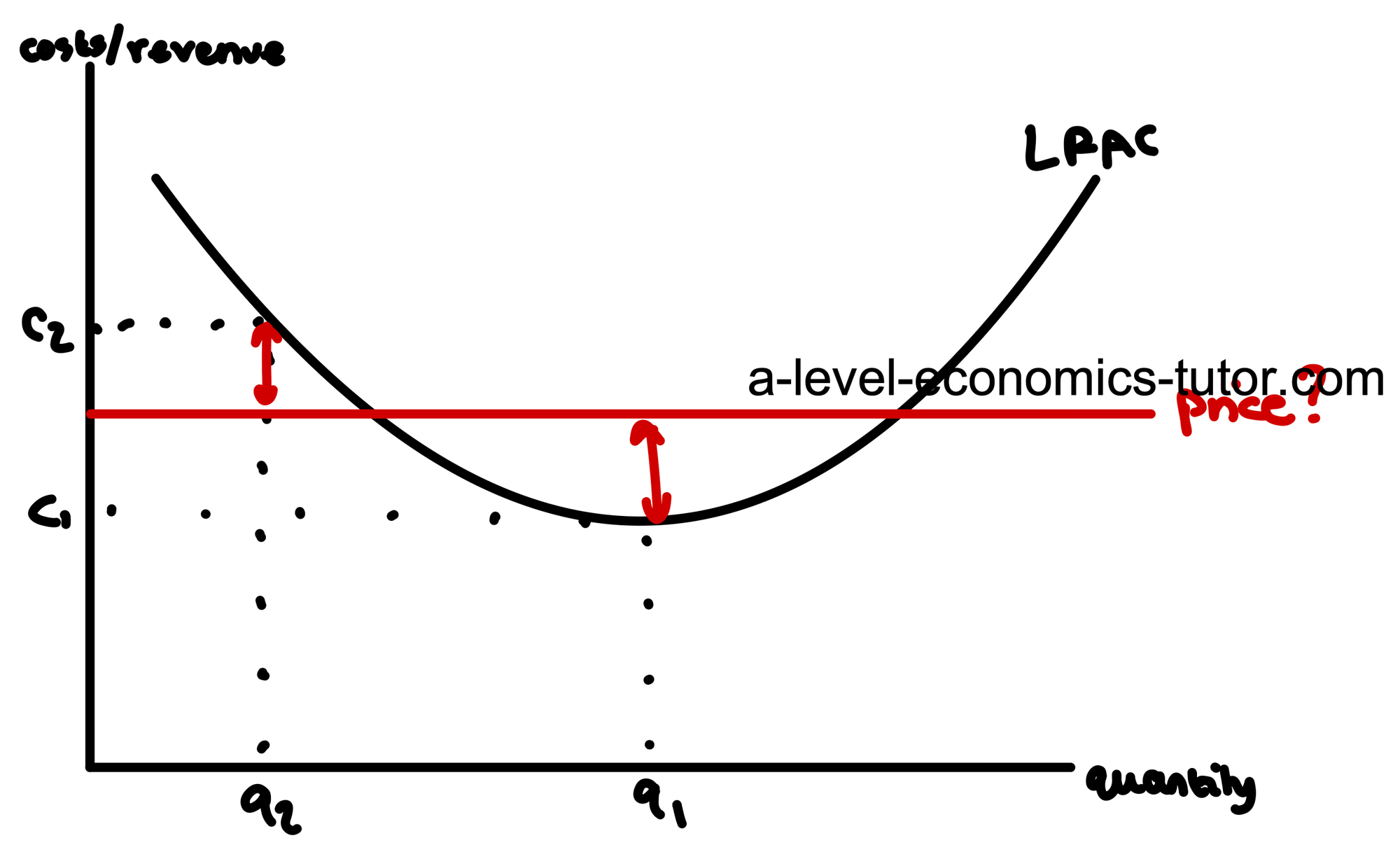
Sales maximisation can be the most important objective for many firms for two main reasons. Firstly, sales maximisation can allow firms to fully exploit their economies of scale. Secondly, this can serve as a form of limit pricing, which can allow firms to increase their market share. Sales maximisation occurs at the output level where average costs = average revenue (AC=AR). By producing close to the lowest point of the average cost curve, firms can fully exploit their economies of scale. As firms increase their output, they are able to reduce their long-run average costs. For example, firms are able to save money by bulk-buying and hiring specialist managers to oversee more staff at once. These lower costs can allow firms to reduce their prices and this can act as a barrier to entry to other firms. Firms who are smaller have not yet exploited their economies of scale and therefore have much higher costs. This means that they would make subnormal profits if they were to compete on price with the larger firm, causing them to lose market share or shut down. Overall, firms who sales maximise can gain market share and grow, which can allow them to make more profit over time.
It is possible that satisficing is the most realistic objective for many firms. Satisficing occurs when firms make enough profit to satisfy shareholders but sacrifice some profits due to the divorce of ownership from control. Divorce from ownership and control occurs when the people who own a firm leave a different set of people in control of day-to-day operations. Managers and workers know that they need the firm to make at least normal profit to ensure the business continues to operate in the long-run. This is to ensure business owners are able to at least cover the opportunity cost of running the business. After this, workers and managers have no incentive to achieve greater profits. Instead, workers may try to improve their job satisfaction and managers might focus on other targets such as increasing revenue or sales to attract more recognition or perks. Business owners can overcome the principal-agent problem by offering performance-related bonuses that align more closely with their own objectives.
A-Level Economics Tutoring
I offer one-to-one and small group A-Level Economics tutoring for students across the UK and internationally. With 87+ five-star Google reviews and tutoring experience since 2017, I specialise in helping students understand difficult concepts and improve their exam technique.