Evaluate the macroeconomic effects of an increase in income tax rates on a country or countries of your choice
Edexcel A-Level Economics 25 Mark Question
In April 2024 the Scottish government increased rates of income tax. Income earnt over £75,000 will be taxed at 45% instead of 42%, whilst income earnt over £125,140 will be taxed at 48%, an increase from 47%. The Estonian government has announced plans to increase the country's income tax rate for all citizens from 20% to 22% in 2025. Evaluate the macroeconomic effects of an increase in income tax rates on a country or countries of your choice. (June 2026)
Plan
- Country: UK
- Paragraph 1
- Argument: one macroeconomic effect of higher income tax rates is an increase in unemployment
- Diagram: decrease in aggregate demand
- Evaluation: however, the overall effect depends on the size of the multiplier
- Paragraph 2
- Argument: another macroeconomic effect of higher income tax rates is a decrease in potential growth
- Diagram: decrease in long-run aggregate supply
- Evaluation: however, higher tax rates can generate greater tax revenue (up to an extent), which can allow for greater investment in the future
One macroeconomic effect of higher income tax is an increase in unemployment. Higher income tax rates mean that workers can keep a smaller proportion of their income. In the UK, income tax rates are not rising but they are frozen until April 2031. This means that more households are being taxed more as their pay rises in line with inflation; the "real" rate of income tax is rising every year. This is likely to lead to a fall in consumer spending. Consumer spending is one of the components of aggregate demand (AD = C+I+G+X-M). This means that the economy will experience a fall in aggregate demand, as shown in the diagram below. Additionally, there might be a negative multiplier effect. This is when a withdrawal causes national income to fall by an even greater proportion. This can be seen by AD initially falling from AD1 to AD2, and then further to AD3. A fall in AD causes real gdp to fall from y1 to y2, and this means that there is a decrease in the value of goods and services being produced in the UK economy. This means that there will be a fall in the derived demand for labour, causing unemployment to increase. This means that even more people could lose some or all of their income, causing consumer spending to fall even further. Overall, the effect of higher income tax rates is likely to be slower economic growth and an increase in unemployment.
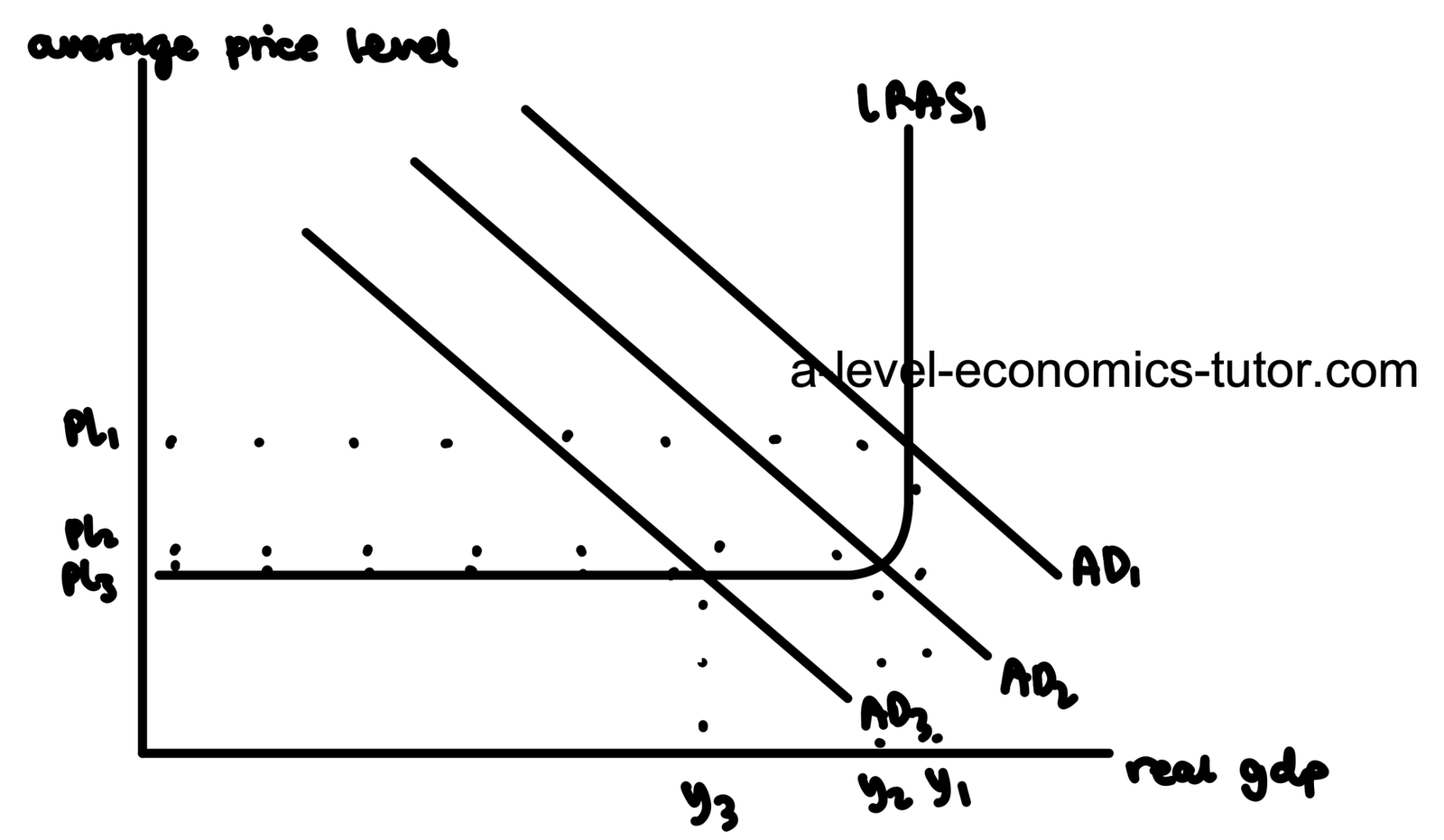
However, the overall effect depends on the size of the negative multiplier; this depends on the equation k = 1/(1-MPC), where MPC refers to the marginal propensity to consume. In this case, if income rates only increase for really high income households, then the negative multiplier is likely to be smaller. This is because higher income households have a lower marginal propensity to consume since a fall in their income is unlikely to affect the amount that they spend day-to-day. Therefore, the government might be able to raise income taxes without causing as much damage to macroeconomic performance.
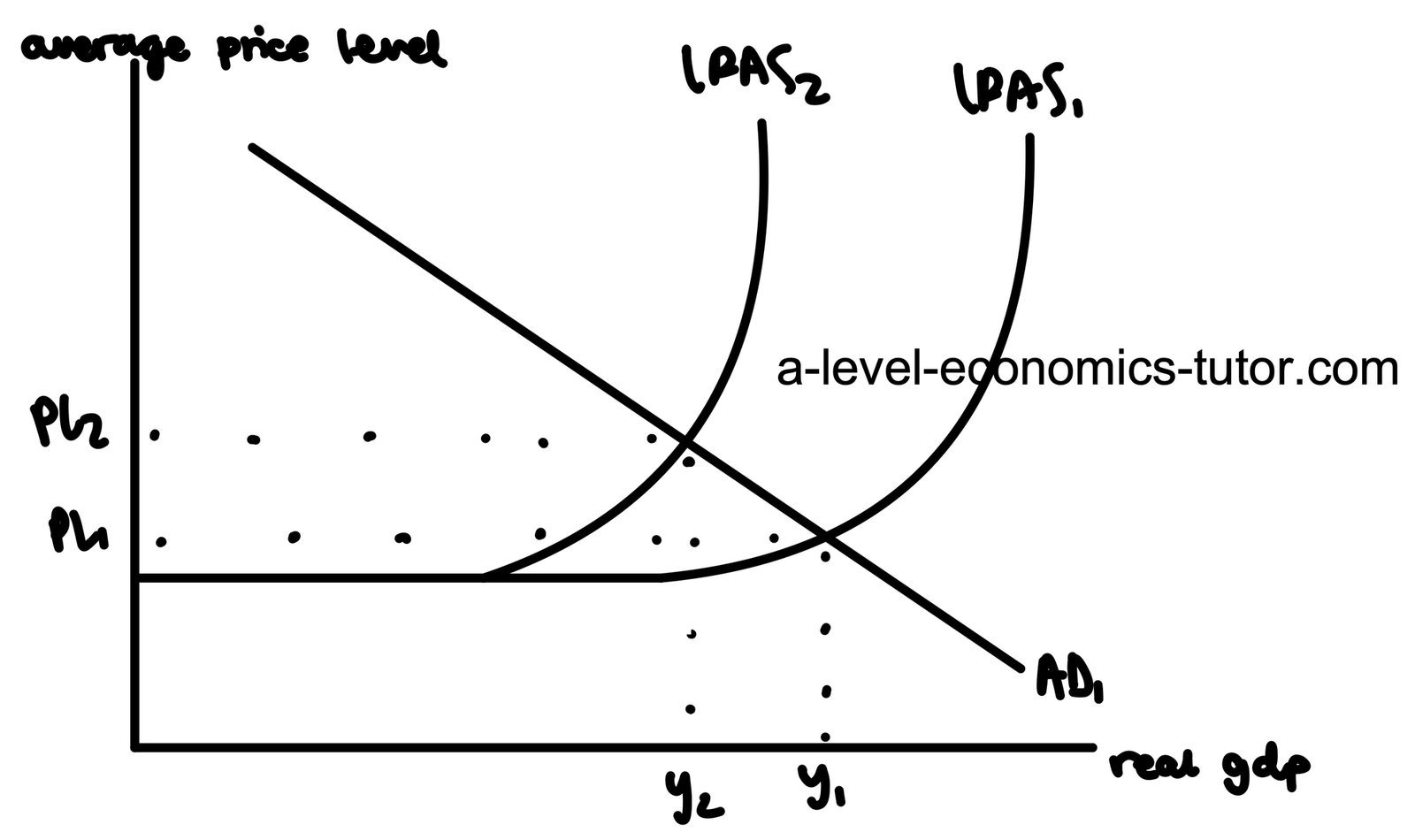
Another impact of higher income tax rates on macroeconomic performance is a decrease in potential growth. Potential growth is the rate at which the UK's productive potential is increasing, over a certain period of time. Higher income tax rates reduce the incentive for people to work, as they get to keep less of their pay. This reduces the incentive for people to enter the workforce, work overtime, or seek promotions. Higher income tax rates can also incentivise skilled workers to move abroad to places with lower income tax rates like Dubai. This reduces the quantity and quality of labour in the economy which leads to an increase in labour productivity; the amount of output produced per worker per hour. Higher income tax rates are especially likely to impact the number of skilled workers in the UK economy as those are the workers who are being taxed 40% or more on their income above £50,270. As a result, businesses are able to produce less goods and services when all factors of production are fully employed. This reduces the productive potential of the economy, shown by a left shift in the long-run aggregate supply (LRAS) curve. This leads to an increase in the price level from pl1 to pl2 as there is the same demand chasing fewer goods and services. Overall, this causes a fall in the potential growth in the UK economy.
However, one advantage of higher income tax rates is that it can lead to a fall in the budget deficit, or even a budget surplus. A budget surplus is when government spending is less than tax revenue in a given fiscal year. If the government are able to run a budget surplus, this would allow them reduce the level of national debt. The UK government is currently spending close to £100 billion each year on interest. By reducing debt, the government will benefit from paying less interest, and this would allow them to implement better or more fiscal and supply-side policies in the future.
A-Level Economics Tutoring
I offer one-to-one and small group A-Level Economics tutoring for students across the UK and internationally. With 100+ five-star Google reviews and tutoring experience since 2017, I specialise in helping students understand difficult concepts and improve their exam technique.