Economies of Scale | A-Level Economics Notes
These revision notes cover everything you need to know about Economies of Scale for A-Level Economics. They're designed for students studying AQA A-Level Economics, Edexcel A-Level Economics, and Edexcel International A-Level Economics. Written by Jaisul Naik, UCL Economics graduate and A-Level Economics tutor since 2017.
What are economies of scale?
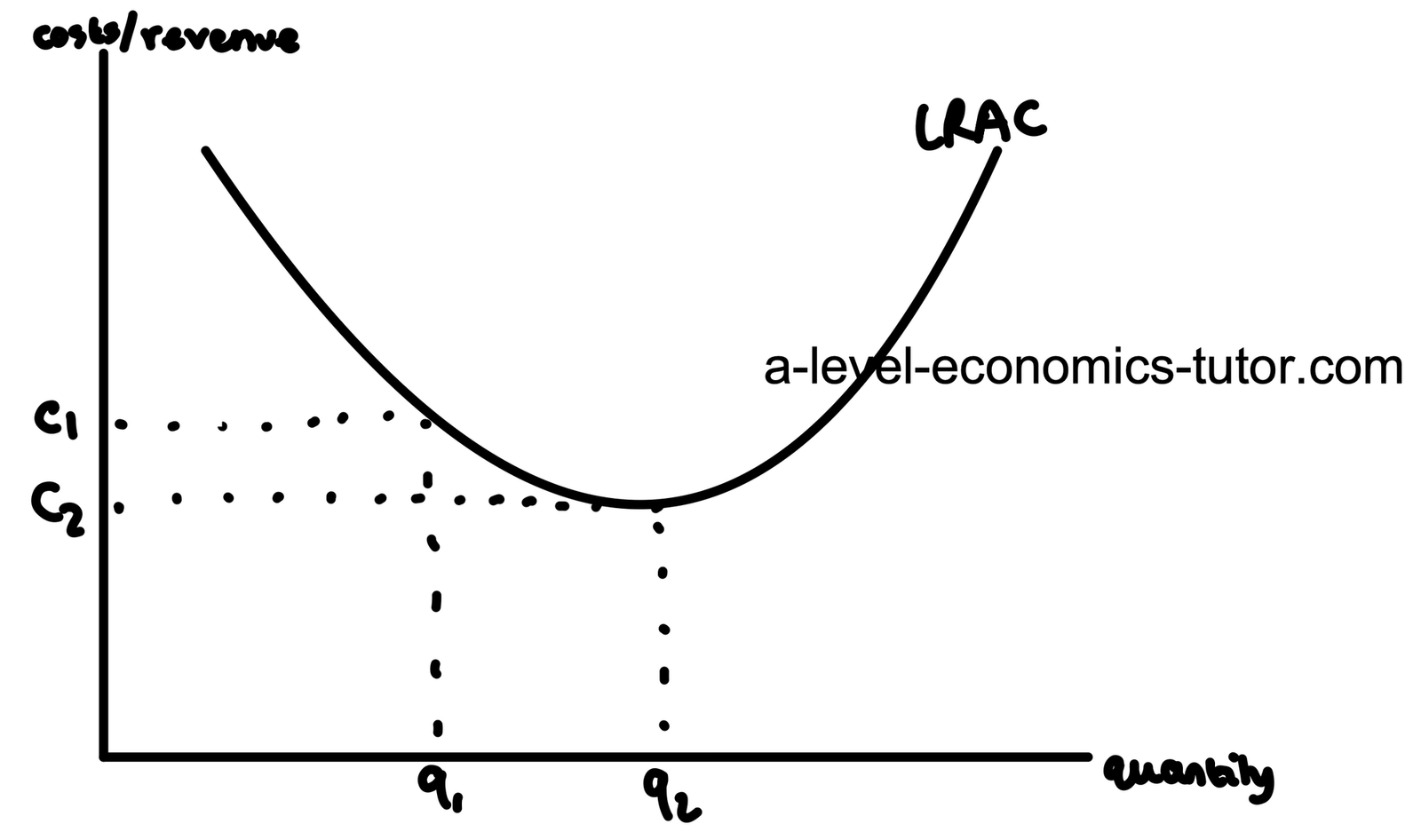
Economies of scale occur when firms are able to reduce their long-run average costs as they increase output.
What are six types of economies of scale?
Really fun mums try making pies.
- Risk-bearing: large firms can spread risk over a wider range of products, so there is less risk of an innovation failing.
- Financial: large firms can reduce their long-run average costs by accessing cheaper loans/ lower interest rates.
- Marketing: large firms can reduce their long-run average costs as one advertising campaign covers a wider range of product and stores.
- Technical: large firms can reduce their long-run average costs as one machine will be used to produce more output.
- Managerial: large firms can reduce their long-run average costs as one manager can oversee more work and output so the average cost of employing them is lower
- Purchasing: large firms can reduce their long-run average costs by bulk buying.
What are diseconomies of scale?
Diseconomies of scale occur when a firm's long-run average costs rise as output increases.